• HOME
  • Latest blog entries
  • BLOG
  • My books
  • Press mentions
  • ABOUT

The Kenyan Explorer

  • HOME
  • Latest blog entries
  • BLOG
  • My books
  • Press mentions
  • ABOUT
  • Menu

Arrival in Tokyo, exploring Jujo, meeting the other #mirozinjapan

February 21, 2017
IMG_20160501_084629.jpg

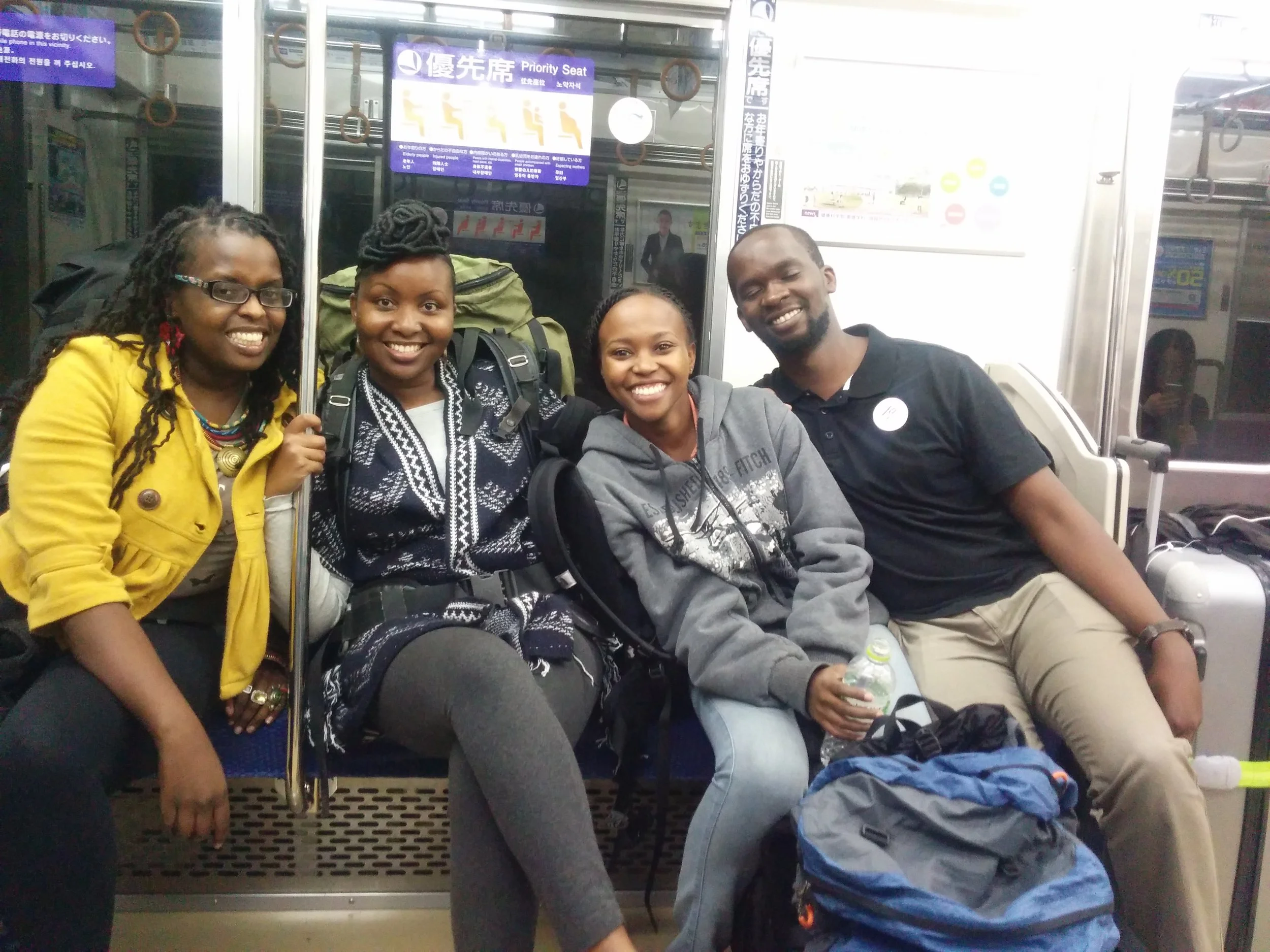
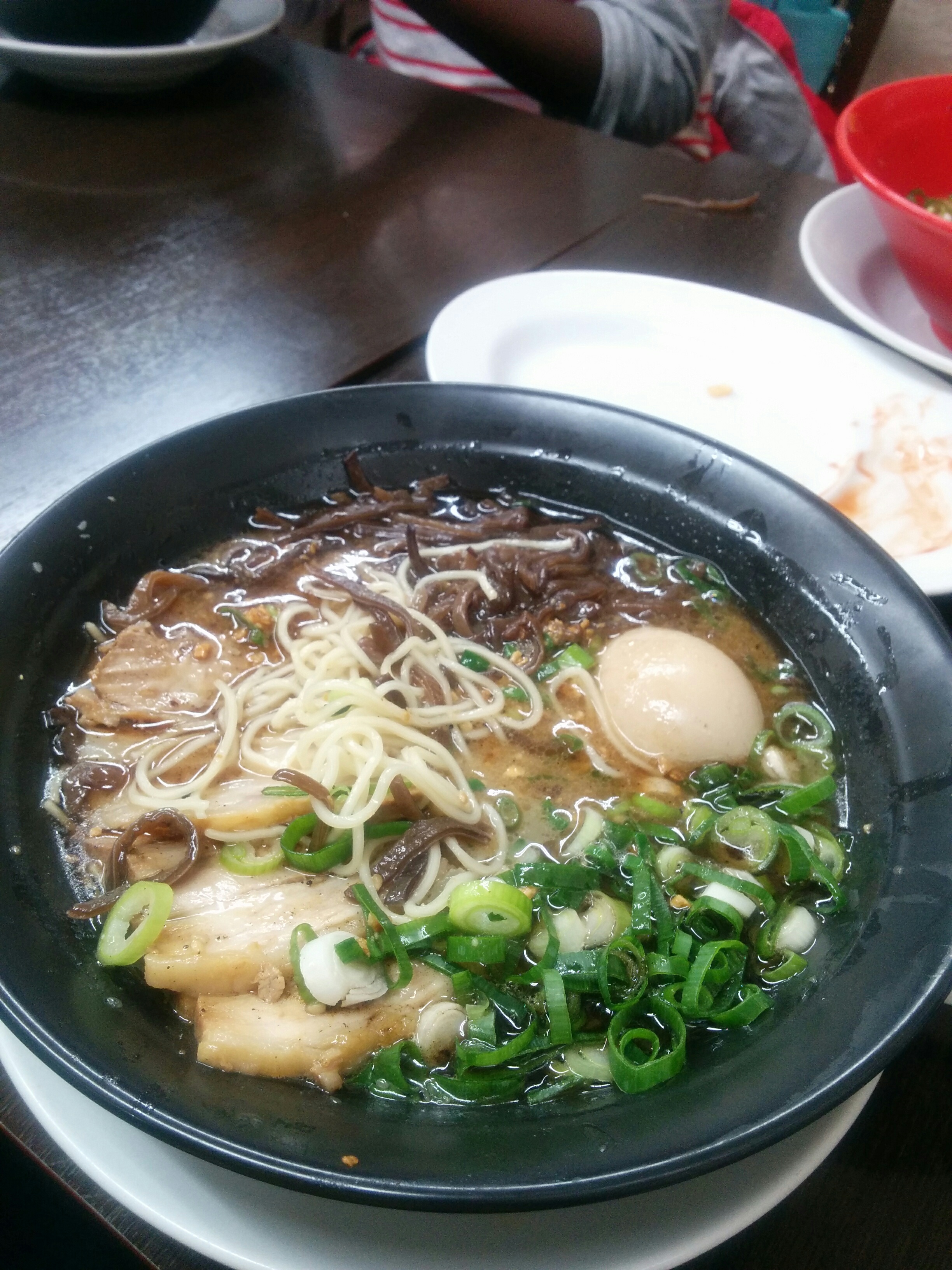
Luckily for us, the hostel was only a few minutes walk from our final train station once we got to Tokyo. When you have an 18kg backpack on your back, this is a very important fact. The hostel staff were really friendly, but these hostels had the tiniest rooms I had ever seen in my life. I had heard a lot about how efficient the Japanese are in using space, but I was not mentally prepared for those tight spaces. Add our huge number, the size of our backpacks etc. to the situation and you got claustrophobic very quickly. We were all extremely hungry. We found a noodle place next door to our hostel. We were fortunate that one of the people who worked at the hostel had joined us at the noodle place. There was a vending machine that everyone needed to make their selection from. Funny, but this is it the moment I realized language would be a problem for us in Japan. Because everything is written in Japanese script, it’s impossible to use google translate as one would do for unknown words in the roman alphabet (most written languages.)

The 7 of us had a wonderful dinner. The noodles were quite delicious. Around 4am we were back in the hostel and passed out.

The next morning I was strangely up by 10am, despite having set my alarm for 2pm. We went exploring our neighborhood with the rest of the team. We explored tea shops, cute shops selling all sorts of delicious looking stuff. The highlight of our walk was finding the 100 yen shop. Suddenly when everything in a shop costs around $1, everything becomes a must-have…Even when that needs to fit in your 18kg backpack:-). We grabbed lunch from a cute little place that had a buffet and sold each container by weight…of course this #miroinjapan filled her container with shrimp and all other stuff that is usuallypricey. Veggies for who? Not when a pound of veggies and a pound of shrimp cost the same.

On our way home I instantly spotted a happy hour place. Even with my non-existent Japanese, Ican spot images showing buy one get one beer free from 7-9pm. I was very excited to have our first happy hour in the actual Tokyo – as opposed to Tokyo restaurant in Nairobi. Unfortunately the place was too full to accommodate a group as large as ours. We ended up finding another bar and drinking sake. Jetlag was setting in. We were home by 9pm. One of my most exciting purchases from the 100 yen shop was a foot mask that promised to reveal the inner princess hiding under the scales on the sole of my feet. Everyone said that the masks in Japan are amazing. I soaked my feet for half an hour in the mask expecting to see miracles in the morning. I hate to say it, but not all masks are created equal. I woke up to the same reptilian appendages. We would later learn that for chapped feet, there is only one solution – the revolutionary babyfoot, designed in Japan – check out the comments on the youtube video – 99% of them are people reminiscing about the absolute pleasure of peeling off the skin from your feet like an orange….sigh..Good times.. One of my our mirozinjapan – a Moroccan who lives in France had said amazing things about it. We were not disappointed when we did eventually find it weeks later. As a sidenote, if you are in Dakar and want Baby foot, Mouna sells them at her store – Massala shop – online and in Yoff. Highly recommend it. There is something so therapeutic about watching the dry skin from your feet peel off like a snake’s skin to reveal your inner baby foot…..sigh….I think I need another round of babyfoot.

In Japan Tags Japan, MirozinJapan, Tokyo, travelling, travel blogger, travelblogger, travel, traveling, backpacking
3 Comments

Heading to Japan

February 14, 2017

It is almost mandatory that all my trips start with me running around. I had a late afternoon flight to Japan. Of course I did not take the day off. I woke up super early to get my work done. Even though these days I have waaaay more leave days than when I was in consulting, I still tend to be a hoarder with my days. I continue to live a Candy Crush life with my leave days – only using them when I absolutely must. Nguhi, see me looking at you and your Candy Crush leave days life:-). I will rationalize it – yeah. I am sure I can finish sending off that document – on the runway (a la Nungari during the Rwanda trip in 2011 or so. A story for another day.)

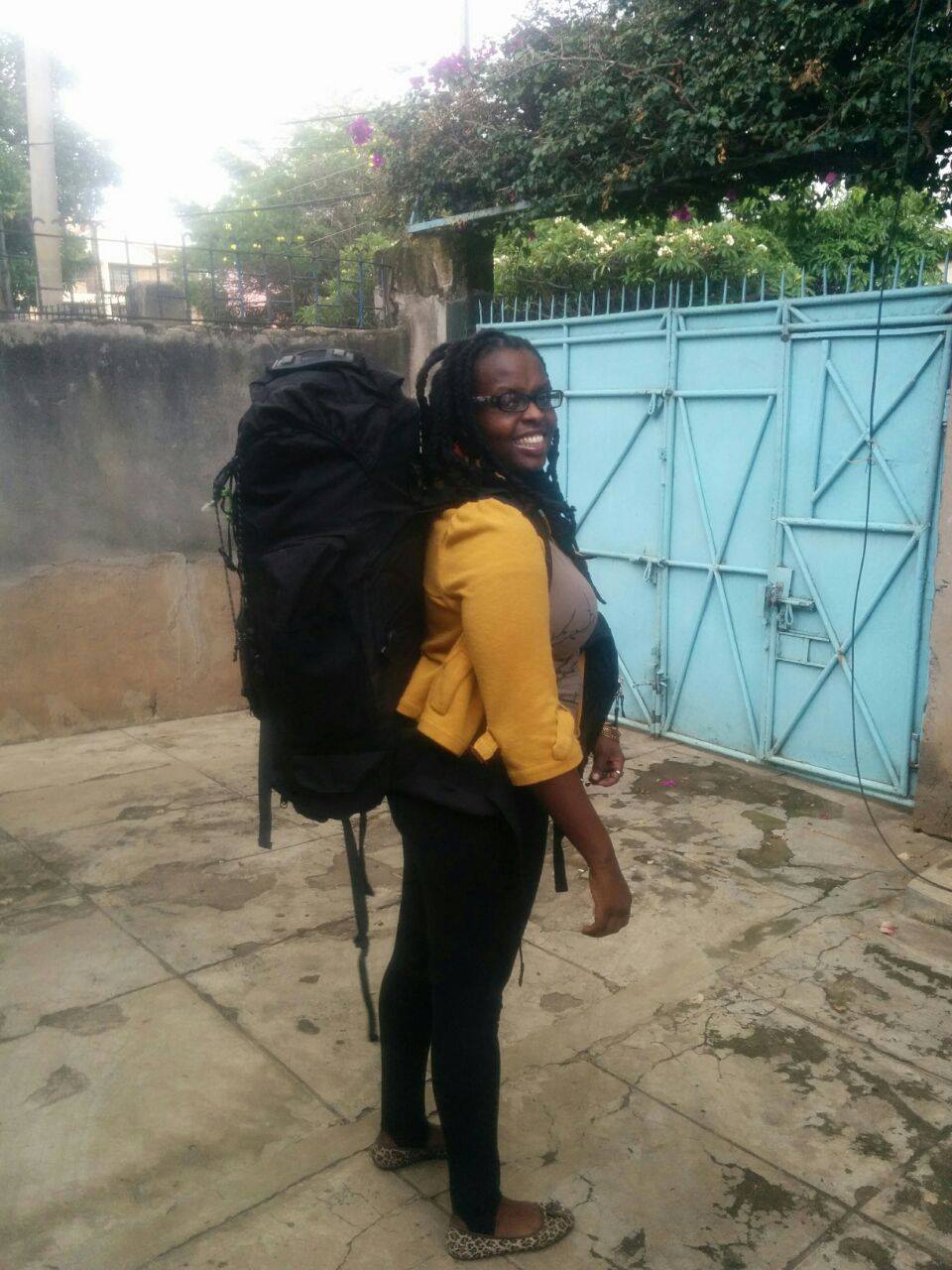
I slept at 5am and was up early to finish work. I hastily packed from 1:30 – 2:15pm. I consider myself a semi-seasoned backpacker. As such I know the essentials to pack. What really holds me back is the stupid stuff I add. I confess that I added around 2kgs of necklaces, bangles, rings and earrings to my 16kg backpack bringing it to an epic 18kgs (of which 2kgs was frivolity at its best.) I got to the airport. My backpack was weighed and that’s when I confirmed that it was indeed 18kgs. Ciku! Oops I did it again. I always pack my backpack with the best of intentions, but then end up adding jewelry, nail polish, lipsticks en masse. This is the monkey on my back. I think it might be a demon. The demon of packing unnecessary stuff.

At the airport I started bumping into some of the other #mirozinjapan – some of whom I knew quite well (close friends and colleagues and others I was meeting for the first time.) Our excitement was palpable. “It’s finally here! Japan, here we come!”

“How heavy is your backpack?”

“You checked your backpack in? What if it gets lost?”

[Good question – Dear Jesus, do not let my backpack get lost. I don’t think they have mitumba in Tokyo or Toi market. I will be rewinding my one outfit for 3 weeks.]

It was a 3 hour flight to Addis with a brief layover followed by an 8 hour flight to Hong Kong, but we didn’t have to get off the plane. We arrived in Tokyo to the friendliest immigration officials. Too many experiences have always left me tentative at such interactions – waiting for it to be a hassle, waiting to be pulled aside on a technicality etc. So when I walk through immigration without any problems, that is worth mentioning. All our bags also made it to Tokyo! We had landed at 8pm and of course none of us had Yen. All the exchange bureaus had closed. We were wondering how we would get money to pay for our train to our home for the night. After a while we found a vending machine that took your dollars and gave you yen. Amazing, right?

We found yet another vending machine that sold sim cards…What is this country where things work like clockwork? We were all impressed, but trying to play it cool. Of course we have vending machines in Africa for changing money and buying sim cards! Mschew! Where do you think we are from? The fifth world? No my friends, we are from the third world:-).

Finally we got our train tickets and jumped into the train. It was to take us 90 minutes to get to our stop. I was assigned as the one to be on the look-out for our stop. I was vigilant for the first 60 minutes, but then I started getting distracted by the bright lights and lovely shops outside the train.

Suddenly I was daydreaming, smiling to myself, “Japan, Japan, Japan. I am in Japan.” Listening to the rest of the crew chatting and laughing when I looked out and saw we were almost pulling out of our train station, “Jujo!”

“Guys! Jujo! Jujo! We’re here! Quick quick! Get your bags.”

It was  mad rush as everyone grabbed their backpacks to get out of the train before the train doors closed. We all made it out and spent a good two minutes dying of laughter about how we almost missed our stop. 

In Japan Tags Japan, Tokyo, traveling, travelling, travelblogger, travel blogger, travel, trip, vacation, backpacking, MirozinJapan
1 Comment

MirozinJapan - the itinerary for a trip of a lifetime

February 7, 2017

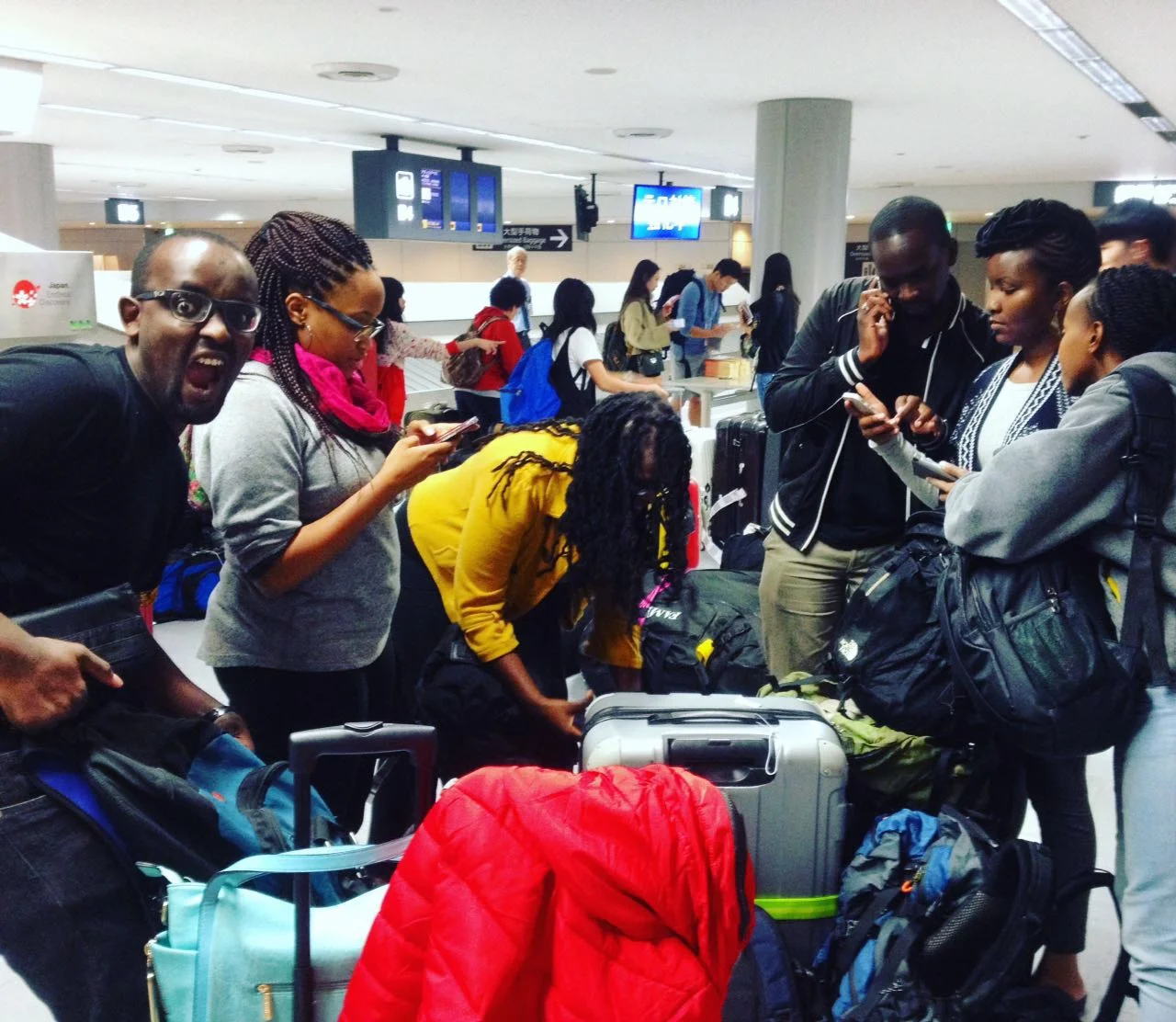
April/May2016. We were going to spend an epic 2-3 weeks traveling through Japan. We? You’re curious who we were. A group of 18 miroz who took to calling ourselves #mirozinjapan and our amazing friend and tour guide the one Natsuno Shinagawa. A few books should be written about Natsuno. She’s a sort of urban legend – except she’s real. She once traveled overland, including hitchhiking, solo from Jo’burg to Cairo for 8 months (although according to her, “it is not possible to go anywhere “solo” in Africa” You will always find company). When studying in a prestigious Japanese university, she made a name for herself by becoming the first student to request an “exchange” to Makerere. She has been a street hawker in Sudan, Senegal and Djibouti selling bic pens with cutout old/rejected ID pics of her and her Korean friend (hey, you gotta add value to your products when selling them, right?). She credits getting her previous job to going to see a voodoo man in Benin. Her favourite places on earth include North Korea, Iran, Somaliland, Papua New Guinea (Yes, she has visited all these places and many more.) She organizes guided trips to Somaliland and Eritrea.  She barely needs sleep, parties like a rockstar and is extremely hardworking. Yes, Natsuno is real.

So us 18 #mirozinjapan knew we were up for a crazy, fun, wonderful trip with Natsuno as our guide in her home country.  The travelers were from Kenya, Cote d’ivoire, Morocco, Senegal and Uganda. Natsuno was extremely organized and not a single #miroinJapan was denied a visa. This is saying a lot when you are a Passport undesirable. The visa process for Japan was actually quite simple as long as we had all the needed documentation. Natsuno made sure we had all of this – including email threads that proved we knew her to ensure we were not going to become #miromailorderbridesinJapan. The itinerary was already the stuff dreams are made of.

‘Nuff said….The itinerary – as sent by Natsuno…..

Group A: April 30 – May 5. Recommended for those who do not have time, but who want to visit photogenic places.

Traditional architecture: ★★★☆☆

City life: ★☆☆☆☆

Interaction with people: ★★☆☆☆

Cultural activities: ★★☆☆☆

Nature: ★★★★☆

Group B: April 30 – May 7. Recommended for those who efficiently want to visit both touristy places and off-the-beaten destinations.

Traditional architecture: ★★★☆☆

City life: ★☆☆☆☆

Interaction with people: ★★★★☆

Cultural activities: ★★★★☆

Nature: ★★★★★

Group C: April 30 – May 10: Recommended for those who want to “do” things, rather than just “seeing.”

Traditional architecture: ★★★★☆

City life: ★★★☆☆

Interaction with people: ★★★★★

Cultural activities: ★★★★★

Nature: ★★★★★

Group D: April 30 – May 13: Recommended for those who want to become Japanese.

Traditional architecture: ★★★★★

City life: ★★★★★

Interaction with people: ★★★★★

Cultural activities: ★★★★★

Nature: ★★★★★

Group E: May 7 – 13. Recommended for those who want to get a PhD degree on a subject called Tokyo.

Traditional architecture: ★★★☆☆

City life: ★★★★★

Interaction with people: ★★☆☆☆

Cultural activities: ★★★☆☆

Nature: ★☆☆☆☆

April 30: Arrival in Tokyo. Depending on your arrival time and how tired you are, we will stroll around Tokyo.

May 1: We will head to my friend's temple, and take a nap first. After lunch at the temple, we will learn to wear kimono and experience the traditional tea ceremony. We will then learn about the Japanese Buddhism and spirituality in the early evening, and all head to the public bath nearby. after taking a bath, we will do s zen meditation, and head to a traditional restaurant nearby for dinner. We will sleep in the temple at night.

May 2: We will go to Tsukiji fish market super early in the morning, and have the best sushi in the world for breakfast. Then we will leave Tokyo early in the morning and depart for Nagoya via Mt. Fuji. We will do a mini hike near the beautiful mountain. We will then catch "shinkansen", the fastest train in the world to head to Nagoya, and will be met by Kohei, a very good friend of mine who is in love with Africa. We will all have local Nagoya food for dinner and sleep in the city.

May 3: We will visit Nagoya castle. we will then see a traditional matsuri (festival), Takebana Matsuri in Gifu. Then we will drive to Shirakawago Village, a UNESCO heritage traditional village. We will sleep in ryokan style guesthouse.

May 4: We will stroll around the village a bit, and drive to the Japan Alpes. We will take "rope way" and go to roten buro, natural outdoor hot spring. We will head back to Shirakawago, where we will learn how to make traditional wood shoes from the local elderly.

May 5: We will head to Takayama, a traditional town in mountains, another UNESCO heritage town with traditional architectures. We will then do "hanami (picnic under the tree of cherry blossom)", drive back to Nagoya, and catch a night bus to go back to Tokyo.

May 6: Arrival in Tokyo early in the morning, and we will (hopefully) get some rest in Tokyo before we head to Ohira, my hometown. There, we will visit a local primary school. Japanese schools are awesome, especially the way they are organized and managed. I’m sure that this experience will blow your mind in many ways! I am arranging some interaction sessions with kids, and have kyushoku (school lunch) with them. You can also participate in some activities like cleaning, which actually is quite fun. After visiting school, we will do cycling in my village. we will head to Ohira-san, a mountain with some shrines and temples. It is actually super nice. We will then be picked up by local host families, and experience a Japanese family life for a night.

May 7: My dad will take you to his dojo, and you will have a chance to practice kyudo, the Japanese traditional archery. My dad and his friends will wear traditional outfit to do some demonstration for you. You will also meet with local kids practicing kendo and judo. After that, we will go to a nearby mountain and pick up some wild vegetables. We will then all cook together, and enjoy nagashi-somen (Japanese noodle. You have to catch running noodle in running water with chopsticks :D), and head back to Tokyo, and visit Roppongi Hills, and have a few hours of free time. Roppongi Hills is one of the most fashionable buildings in Japan, and you can enjoy both shopping and window shopping. There is also a very good modern art museum. Then we will head to nearby Tokyo Midtown, another cool place to be. This is also one of the places where you can find a chic supermarket and find a mango which costs USD 70. In early evening, we will throw ourselves in the madness of Shibuya, the Mecca of Japanese high school girls. You will cross the busiest crossing in the world, and walk around to explore interesting people. We will explore depa chika of Shibuya Station, i.e., foodie’s paradise. Shibuya also has many cool bars, so we will do bar-hopping, then go clubbing. When you are tired, you can go to one of the manga café, a manga library with comfortable chairs and hot shower (!!!) and sleep there. Alternatively, you can stay in a hostel in Tokyo.

May 8: I will organize a huge picnic at Yoyogi Park (just an FYI, I organize a picnic there every time I go home to catch up with friends. Usually 200 people attend!!). We will party at the park, eat Japanese food and drink sake. You will also meet my friends who are all friendly, hilarious, diverse and awesome. During the picnic, you can walk around the fashionable Harajuku Area (Gwen Stefani sings about Harajuku and “Harajuku Girls”) and Meiji Jingu Shrine, where you will probably witness a traditional wedding. My friends will be happy to show you around. We will move to an izakaya and have a nomikai (drinking party) with some of my friends in the evening. We will also go to the top of Tokyo Metropolitan Government Building to see the night view of the city.

May 9: Traditional and Modern Tokyo Day. We will first visit Edo Tokyo Museum, and learn about the history of Tokyo. This museum really is so much fun. It is also located very close to Tokyo Sky Tree, the tallest architecture in Japan, which is not really worth entering but quite cool to view from outside. We will then watch sumo in live, and have traditional bento (lunch box) for lunch. After sumo, we will visit the Sensoji Temple and have a few hours of free time in the traditional Asakusa Area. Then we will go for an all-night karaoke. There will be a space for you to take a nap. Alternatively, you can stay in a hostel in Tokyo.

May 10: We will visit Kamakura, which used to be the capital of Japan in the 12th and 13th century. You can see a LARGE and gorgeous statue of Buddha there. After visiting some shinto shrines and old town, we will move to Yokohama. We will go on cruising at night...but this is not a normal boring touristy cruising. We will pass by beautiful Yokohama Bay and the largest industrial areas of Japan.

May 11: Shopping Day in Tokyo. We will do a late morning., and go to Akihabara, the Mecca of otaku (geek) culture. We will stroll around a bit together, and will have a free time for a few hours. This is where you can buy electronics at a very good rate, and there will be English-speaking people who will assist you. We will take a coffee at a Maid Cafe, where you will be served by “kosupure” girls. We have picnic lunch at Ueno Park, and walk to Ameyoko Street, where you can buy pretty much everything from grocery to cheap kimono. My recommendations are 100-yen shop, the Japanese version of one-dollar shop but FAR BETTER, and “Don Quixote.” We will have another few hours of free time for you to shop around. If you want to buys specific things in Tokyo, let me know so that I can take you where you can find them. Group C will head to the airport after enjoying shopping. Group D will head to Shinjuku, and go to the Robot Restaurant for dinner.

May 12: Quiet and Noisy Tokyo. We will first visit Yasukuni Shrine, the very controversial war shrine which is causing political problems in East Asia. This is also a controversial war museum, and I personally think that this is a very good place to learn about complexity of the Japanese history. We will then visit the Imperial Palace, and continue to the Koishikawa Garden, a historical and traditional garden. We will visit the Nezu neighbourhood and then Sugamo, so-called Mecca of the fashionable and energetic elderly people. You can probably ask them about their secret to stay healthy for a long time. At around 5pm, we will head to Koenji, and start getting ready for "Le Petit Dakar à Tokyo" - a one-night-only bar where I will be bar-tending at! We will all meet guests and friends. Let's show how cool the bar culture can be in Africa!

May 13: “Off-the-beaten-track Tokyo.” We will take a train to Okutama Area, where you can see a number of tiny villages in mountains…believe it or not, there is a countryside in Tokyo. We will do some easy walk in the mountains, and visit abandoned villages. These villages are very little known even among the Japanese people. You will literally and extract discover pre-WWII books, furniture, etc.

**

We knew these 2-3 weeks were going to be anything but mundane:-)
In Japan Tags Japan, Tokyo, MirozinJapan, Visas, travel, travelling, traveling, travelblogger, travel blogger, backpacking
2 Comments
img_20151128_223916.jpg

Traveling on an African passport, the Motorola T190 life in the world of i-phones

January 31, 2017

I had spent close to a week in Bangladesh presenting and participating in the Dhaka Literature Festival in November 2015. After the trip I took a few days off to tour Singapore and Malaysia—both of which I fortunately did not require a visa in advance. My return flight to my hometown, Nairobi, would transit through Istanbul. There was an unavoidable 24-hour layover that the airline would compensate me for in the form of a five-star hotel room during my long wait. I got to Istanbul—exhausted and eager to get to my nice cozy hotel room, shower, and sleep off my jetlag before my long trip to Nairobi.

Airline officials assured me that all I needed to do was get my one-day transit visa for Turkey from a little machine. The first question on the screen read “Are you a citizen of the USA, UK, Germany, France… Chile, South Africa?”

I am a Kenyan citizen.

“Are you holding a valid visa for USA, UK, Germany… Chile, South Africa?”

Uhhmm. No. I am generally issued 10-day visas, two-week visas, one-month visas for certain countries if I am very lucky.

The next message on the screen read, “Unfortunately you are not eligible for a transit visa.” Just like that, I realized that my Turkey experience would be lived at the airport. I got back to the information counter sad at the realization that a valid Chilean visa was more readily accepted than my Kenyan passport.

I was led to a huge football stadium of a bedroom—filled with other black people, brown people, and some Arabs – those of us passport undesirables. I was shown my makeshift bed, given a pillow and a thin blanket. “You can stay here ’til your flight, tomorrow.”

It made me think of all the indignities I and so many other Africans suffer at the hands of immigration officials.

Full article available on Quartz. 

In Africa general Tags Visas, Visa restrictions, Africa, Quartz, travelblogger, travel
2 Comments

How do you say "facial paralysis" in French?

January 24, 2017

[Flashback from September 2016]

Today I am smiling....cause I physically can. It's so exciting. It's the little things in life that actually mean the most. Over 2 weeks ago I was diagnosed with a rare but treatable nerve condition that results in facial paralysis "Paralysie faciale a frigore"/"Bell's Palsy." It's been a trip but I am filled with so much gratitude at the moment that I am recovering well.

It all began with what I thought was an earache, then tonsillitis. After taking some antibiotics that are quite similar to penicillin my face started to swell - like Will Smith in Hitch. I called a doctor and was put on treatment for the tonsillitis. He expected the swelling to go down on it's own. 2 days later there was no progress - the doctor came to see me. That's when he had me attempt to do simple actions such as "Close your eye", "Smile"etc- and that's when I realized that even though the message in my brain was saying "close your eye", "smile" etc, nothing was moving on half of my face. Half of my face was completely paralyzed. Of course all this was happening in French. So when he diagnosed me with "Paralysie faciale a frigore" I thought to myself I had had a stroke - cause that's what I looked like. A person with a stroke -drooping face, no control of facial nerves and muscles etc. He saw the look on my face and told me not to worry. It's treatable and will go in a few weeks....A few weeks??? How am I to function without half of my face working?

I had to google what I had in English. Of course it was scary finding Palsy in the English name of this condition. I thought to myself "Palsy" - that must have something to do with my brain. I haven't yet finished book 2 - I think I need my brain to be fully functional to do this. I was worried.

I went to see a neurologist and the diagnosis was confirmed. It gave me some peace of mind because the neurologist confirmed that with immediate treatment, I could be fully functional in 3 weeks. Thus began my daily injections (on my butt en plus,) daily physiotherapy sessions with electroshock therapy to my facial nerves and a whole lot of meds.

I would describe myself as a light to moderate night-time drooler in general - though maybe Wakonyo Kimeria, Hajila Koitoto Kimeria and Phoebe Makhulo might beg to differ. The first few days of Bell's Palsy - I turned into a drool monster. When you can't control half your face, you can't open or close your mouth - or prevent drool from dripping. Eating was an activity I could only undertake in private - it made me remember the difference between the german words "Essen" for when humans eat and "Fressen" for when animals eat. It was not pretty.

One eye couldn't close - ever. You know what is more creepy (or more romantic depending on the setting) than finding someone watching you sleep? Waking up to find yourself watching you sleep- now that is material for a horror movie right there....I would manually close the eye using my fingers then wake up again a few hours later to find my eye wide open.

Smiling - I smiled like the joker. My mouth would completely go to one side.

Brushing my teeth -the bathroom floor would become a swimming pool.

So many moments during the past few weeks made me laugh. Sometimes you have to laugh - cause things can always be worse....and I always believe that having a positive attitude about things never hurts. Of course thinking positive will not fix everything, but negativity is definitely not your friend..

That day when I urgently needed to get to my neurologist appointment and I told the cab guy to take me to "Clinique du cap" but because my speech was affected by the palsy, I could only say "Clinique du caf"....He pretended he knew where that was. Halfway there, he asks for my phone (because he has no credit), but needs to call another driver for directions. He calls and asks for "Clinique to CAF" and i'm telling him "Not CAF", "CAP"...but of course I have no Ps.....so he says, "Yes, Clinique du CAF"....and I'm there in the backseat feeling like crying out of frustration...Like really.....The letters I had to lose with this issue were the ones needed to direct me to the hospital? We were late for my appointment - and I had to wait in the reception for 2 hours till the doc got back from his lunch break.

That moment I told Mou Na I was going on a tinder date and she was making fun of me, "Meme si tu es malade tu chasse toujours des hommes Senegalais"/"Even when you are sick, you are hunting after our Senegalese men"....and I wanted to tell her the hunting equivalent of "Mficha uchi hazai"/"One who hides their nakedness won't give birth" or "Mchaguo jembe si mkulima"/"He who chooses a hoe, is not the real farmer"/"You should work with what you have.....even if that's half a face............Yes. It was a good tinder date too.

Or the first day of physio when I was given a list with exercises I need to do daily and I could only recognize words such as nose, eyebrows, teeth etc....I learnt a lot of French that day ''Pucker your lips","Puff up your cheeks", "Frown", "Flare your nostrils" etc.

Or the evenings when I am doing my facial exercises (including blowing 30 kisses) and i'm sitting by the huge mirror next to the window....and the gardien is patrolling - likely wondering why I am blowing kisses.

Or the daily physio sessions where your face gets hooked to sensors - and you're feeling all G'd up like 50 cent in "Go go go shorty...It's your birthday"....Yeah...maybe it was his chest and in this case it's my face...small difference. So there I am like 50 hooked to the machine that literally shocks your facial nerves. In the beginning the sensation is exactly like when you were a dumb kid and you went sticking a fork or knife into a socket - only to be left on the floor having been pigwad a good shock. What were we even trying to plug in at that point? Not like we had phones or anything? It must have been something silly - that we were not even supposed to be using - iron box, kettle....Anyway yeah, so the machine shocks your facial nerves...It's a strange sensation at first, but after a few minutes I could not stop laughing..I think it somehow tickles your brain. I was telling myself "Shhhh Ciku. Now people in the hospital think you are OFFICIALLY mad."

Or my wonderful Cape Verdian physiotherapist - we would spend the session (in between shock treatment) discussing Cesaria Evora, Lura, Thiofs in Dakar etc. Amazing girl talk.

Or having to chew gum throughout - it helps..Feeling like such a naughty teenager. I don't know if there is a way to chew gum as an adult and not look frivolous.

I did that African thing where I didn't want to tell everyone I was unwell because things always sound much worse to family when they are far. Then my brother Tony Kimeria calls me last week and I knew I had been outed...Then he tells me my other brother William Kimeria had the same exact issue in 1998 but of course, he also never told my mum or the rest of the family because he didn't want to worry her. The weight of secrets:-) It was good though talking to my brother and hearing about his experience and his recovery. I had never ever heard of this condition till I got it...

I know you're wondering - did the thought that I had been jujud ever cross my mind? Of course - I would not be a real African if I did not give that some consideration. It has to cross your mind when you wake up and your mouth is completely facing one side....I had also been warned that West African juju is stronger than East African juju. I ruled it out though. I've not wronged anyone in Senegal for them to go and tell the jujuman to cast a spell on me.

I got so many lessons from this whole experience. I think one of the largest that I can apply to life is about self-improvement. We will never ever be perfect. Perfection doesn't exist - in anything we do in life, but what's important is continued improvement. I got this revelation as I sat by the mirror day in, day out doing my facial exercises. Day 1 of "raise eyebrows" - nothing happens. Day 7 - Nothing happens but there is some twitching....Day 12 - my eyebrow can move - all on it's own!! It was so exciting. If my eyebrows can do push-ups, I can freaking do push-ups too.Salma Ait Hssayene knows doing a full push-up has been one of my physical goals for 2016. If my eyebrow can do it, by hell I can do it too:-)

So what causes Bell's Palsy? It's completely random. When you have chicken pox, the virus remains latent on your nerve cells. In very rare instances - 0.025% chance - the virus can get reactivated leading to the swelling of the 7th cranial nerve close to the base of the ear - that then results in the nerve being blocked and the paralysis of facial activity - it usually affects half of your face.

Still on meds, treatment etc. for the rest of the week but I feel so brand new - and I am able to marvel at the little things....like closing my eye, raising my eyebrows, eating in public....and smiling.....

So today I am going to smile at everyone and at everything - mosquitoes, strangers, trees,my own reflection.....cause I can smile.

In Senegal Tags Dakar, Senegal, Bell's Palsy
1 Comment

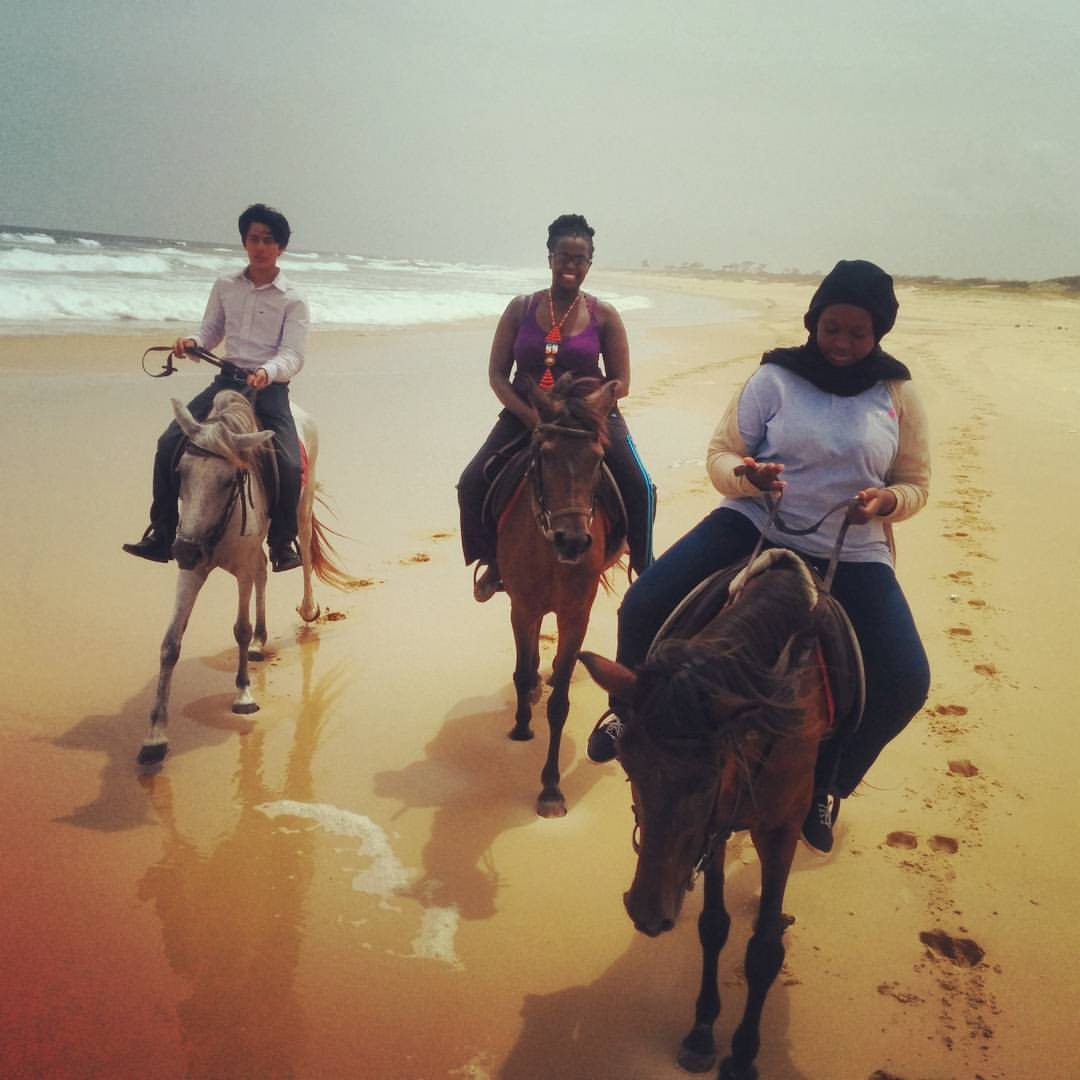
I fell off a horse today

January 17, 2017

[flashback from July 2016]

I fell off a running horse today. I should start by saying I'm 100% ok..My lipstick didn't even smudge - Mac is the 8th wonder of the world.

I was always afraid of falling off a horse. You know that's how Don Draper's dad died. I think he fell off a horse and it kicked him in the face. Mine was less dramatic than that.

I think what happened is that my horse - Oasis - has been watching Usain Bolt and was inspired. We were three riders - Aurelien Chu who is an expert rider. Mou Na who is also a novice like me, but loves speed. Me who has ridden a few times but only with very calm horses that rarely/never gallop.

We start off, it's lovely - Aurelien is galloping, me and Mouna are mostly strolling or trotting.i see signs very early that my horse is an overachieving leader - never a follower. Oasis wants to be ahead of everyone while me I'm ok with staying close to the reassuring presence of the guide. By the ocean, she wants to run in and play around. I can appreciate that - I'm a water baby too..

Then the excitement begins. Mouna wants to go fast but her horse (my horse's twin) will only gallop for 5 seconds then chill. My horse on the other hand wants to go for gold. Every time anyone gives the call for their horse to run, it's my horse that goes off running. At first I'm freaked out by the speed - then I start to enjoy the adrenaline. I learn to lean forward when she's galloping and really squeeze my thighs hard so that you don't lose balance. We are at an ok rhythm - she gives me that nice adrenaline rush but when i kanyaga brakes, she stops. Everytime Mouna or Aurelien tell their horse to run, it's Oasis who runs fast.
Women, they never tell you. Wear a sports bra for horse riding. The ladies had long escaped from their prison.

Then we are galloping and she decided she has to be number one. So me I'm kanyagaing brakes telling her number last is ok. She wasn't having any of that. Now she's trying to overtake Aurelien's horse - sibling rivalry has already made her pass Mouna's horse. She's flying (at least that's what it felt like to my novice self.) She sees Aurelien's horse in the distance and says "bilaz! It can't end like this." Now she's really flying - I'm pulling the reins saying "Arrête! Arrête!" forgetting she's more conversant in wolof than in French. I lose balance and feel myself fall...

Oh my gosh! I've fallen off a running horse. I roll as far as I can - I don't want her to land on me! Turns out I have no need to worry, Oasis didn't even look back.. I thought we were friends! I petted you before the ride. The guide saying "Elle aime les câlins"/"she loves cuddling"…Me too! We have some sort of sisterhood!

Naaa aaah - this girl went for gold:-) Are you ok? Yeah - except my ass really hurts. I landed on it - which is a good thing.... Many worse ways to fall. I stand up ...hold up! What is that noise in my ear? VOK? Turuuuuuruiiiiii turuuuuuruiiiiii

.. Why do they sound so far? I fall on my ass again... .i momentarily remember there a major connection between balance and your ears.. After a few minutes I'm ok to stand up, get back on Oasis and finish the ride - with the guide holding her reins..

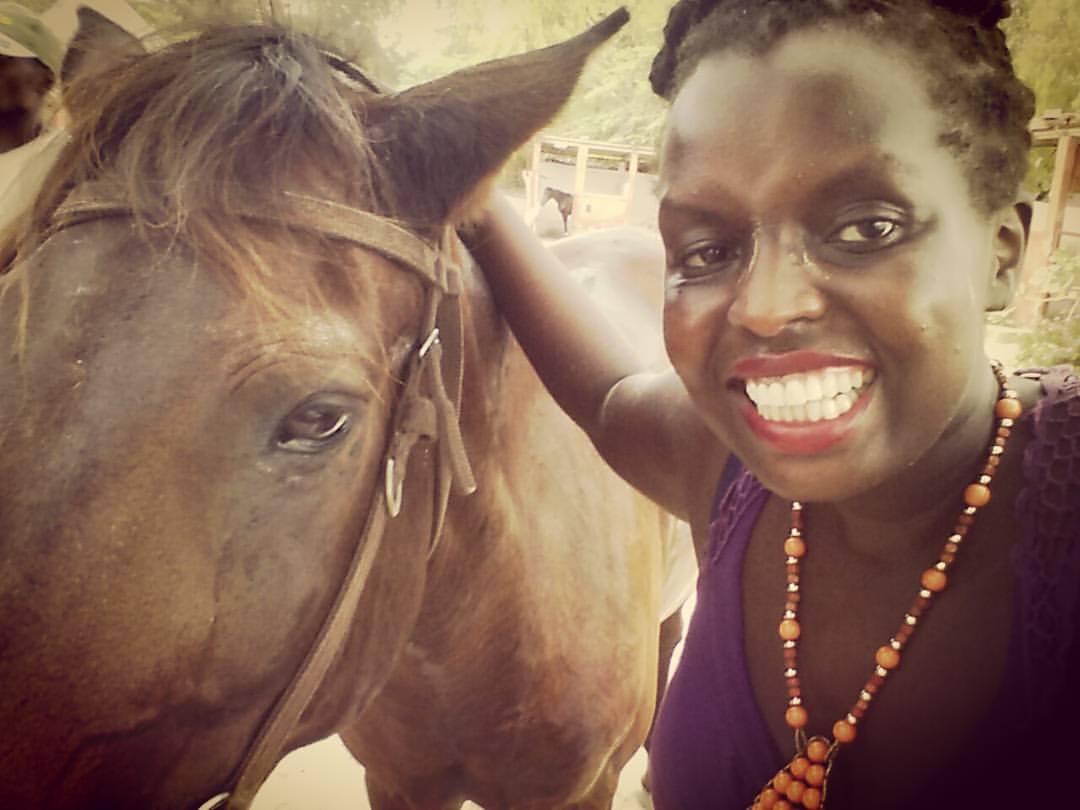
Oasis you're cool - we cuddled and took a selfie and all after that, but please don't judge me next time when I take Mouna's horse. It's not you.

It's me.

In Senegal Tags Senegal, Dakar, traveling, travelblogger, travel, travelling, trip, holiday
6 Comments

Celebrating Christmas in Senegal

January 10, 2017

This time of year, when you take a walk in the streets of Dakar—the capital city of Senegal, that is 92%-95% Muslim in one of the hottest parts of the world, you stumble upon decorated snowmen, Christmas trees with cotton snowballs, traditional masks covered in Christmas lights. It lifts your spirits and gives you hope the end of the world might not be as near as it seems.

The other day I told someone here I love the religious tolerance in Senegal. They told me it’s not “religious tolerance” but “solidarity.” I love that.

I’ve always been uncomfortable with the term “tolerance.” Something about it inherently means there is something wrong about the other—that it has to be “tolerated.” It’s like how you have to tolerate your kleptomaniac friend or your hypochondriac relative. The word ‘tolerance’ gives us the feeling that we are somehow more superior in some way, but graceful enough to not detest our object of tolerance—even though we feel we have every right to.

Teranga—that’s the cornerstone of Senegalese society. Senegalese people are known to be extremely warm and welcoming to each other and to strangers. It is something they highly value as a society. In addition to that, they respect other people’s cultures and way of life even if it’s contrary to theirs. In the streets of Dakar, you will see women in small shorts or mini-skirts alongside other women in Hijab. No one will bat an eyelid. Your way of life will be respected and in turn you should also respect their way of life.

Full article available here on Quartz. 

In Senegal Tags Senegal, Dakar, travel, travelblogger, travel blogger, travelling, traveling, solotravel
2 Comments

Up close and personal with sea creatures

December 6, 2016

Two months into my Dakar move, I heard about a grand annual race that takes place from Dakar to Goree island – a distance of 4km. I love swimming! Me and a few friends decided to start training for the race by swimming from Ngor to Ngor island and back a few times a week. I still recall that first time. It was something from a bizarre comedy. This was my first time swimming in the ocean. Of course I have swam in the Ocean a few times, but it’s more of jumping, catching waves etc. – not intentionally leaving the shore to swim into the deep of the ocean – get to an island across and swim back. I have also swam in other water bodies including a river in Arembepe, Bahia in Brazil. There I was enjoying the swim in the peaceful river when my friends called me back. “Watch out for the snakes!” So river swimming – yes there are risks. My favourite open water swimming was in Lake Tanganyika in Rumonge, Burundi. That water was perfectly clear, freshwater lake – no salt, calm…and I was told that in this particular part there are no hippos or crocodiles. It was such an idyllic place to swim.

The ocean though – I had my concerns before. What about the salt? I was going to wear goggles but you know you can never trust those things – the number of times they get misty and you can’t see anything. What about the waves? We were going to swim at 7am and the waves were not expected to be terrible. What about the sharks? There have been only 4 shark attacks in Dakar from 1828 – 2004. Basically if I got attacked by a shark, then it was fate.

There were 5 of us the first morning. We got to the water at 7am. The view was lovely – the sun rising over the ocean, rocking boats by the beach, a nice view of the island we would be swimming to. We began swimming and everyone got to their natural rhythm. We were all swimming at different speeds and doing different strokes. I chose to do breast stroke as it was the easiest to breathe in, given the waves coming in from the side. I would have drunk too much water if I tried to do crawl – and crawl is tiring for a long-ish swim. Everything was going perfectly up until I was really close to the island. One of my friends is an outdoors rockstar. She had already done the Dakar to Goree swimming race twice, rides a scooter, surfs all the time……ooooh and by the way, she also happens to be an amazing project manager at DalbergJ, in addition to being a really nice, kind, fun person! Before we started swimming, she warned us “When you get to the other side, there will be rocks but don’t worry. They appear much closer than they actually are.” At that point, I had wondered why rocks should be something to worry about – I would soon learn.

I got to the rocky part – the rocks were still far beneath me. With my goggles I got to see lovely small fish swim past me. I was marveling at nature. I went a bit further and because the tide was low, the rocks were much closer to me. It was becoming hard to swim as the water was now really shallow and the rocks were touching my thighs. The obvious instinct was to walk on the rocks…..

But……

The rocks were covered in poisonous sea urchins.

At first I didn’t see the sea urchins. I stood on the rocks a bit. At this point, Tania (the rockstar) turned back and told me – “Ciku don’t stand. Keep swimming. Swim flat so that you don’t touch the rocks. There are urchins on them!”

Up to this point, my interaction with sea urchins had been limited. There had been a plate full of live urchins that my crazy cool Japanese friend – Natsuno – had ordered the first time we went together to Point des Almadies. Those things are ugly! So I knew they were ugly and move like something from a nightmare.

I had later learnt that on top of being a very creepy meal, they are extremely dangerous. Two weeks before, Tania had been surfing and landed on sea urchins on a rock. Her knee had been the size of small football for 4 days.

I knew I wanted nothing to do with these urchins – not on my plate, not under my skin.

“Ouch!”

“Did something sting you?”

I replied, “Yeah. My foot hurts and my finger too.”

“Oh no. You’ve been stung by sea urchins. Let me see if there is a way to get to the beach without having to pass these rocks.”

By this time I was petrified. I had no desire to get to the island anymore – we were close enough, but would have to go through poisonous territory to get there. I decided to turn back and swim back to the mainland. By the time I got to the mainland, my foot and finger were stinging. From an inspection of my wounds, we suspected that my finger had been stung by a jellyfish, while my foot had sea urchin spikes in it. Tania got a needle, heated it usinga lighter and got to work. I thought I would need a shot for the spike removal but it wasn’t too bad.

Some spikes were really deep inside and Tania advised to call a doctor home to come remove them immediately or risk getting really swollen and having to deal with lots of pain. A doctor was called and I needed quite a bit of language support from my friends as I could not even pronounce what got me Les oursins (sea urchins) et une meduse (jellyfish). I kept on saying Les Oiseaux (birds.) Clearly the doctor must have been wondering how “birds stung the sole of my foot.”

Aaaah. I got up close and personal with these sea creatures! Be warned. These stings get worse day by day. On the first day I thought “this is not too bad.” By the 3rd day it was really painful to walk. I had to bail out of a weekend trip to Gambia.

Sea urchins, next time I will eat you.  

14068583_10100939838098718_3326856242990312720_o.jpg
In Senegal Tags Senegal, Dakar, travel, traveling, travelblogger, travelling, trip, Vacation, holiday
Comment

Quotable quotes from the Hargeysa International Book Fair

November 22, 2016

There were so many remarkable people at the Hargeysa International Book Fair (HIBF) and so many things they said that I still reflect on. 

"Marriage in our society is not considered a partnership, but an ownership"

"I am always in competition with myself. I am always in competition with the challenges that I have."

"I have this powerful urge to solve problems."

"All Somaliland needs is that recognition and the acceptance that Somaliland will not cross that bridge of forming a union with any other country again, because there is no bridge to cross." 

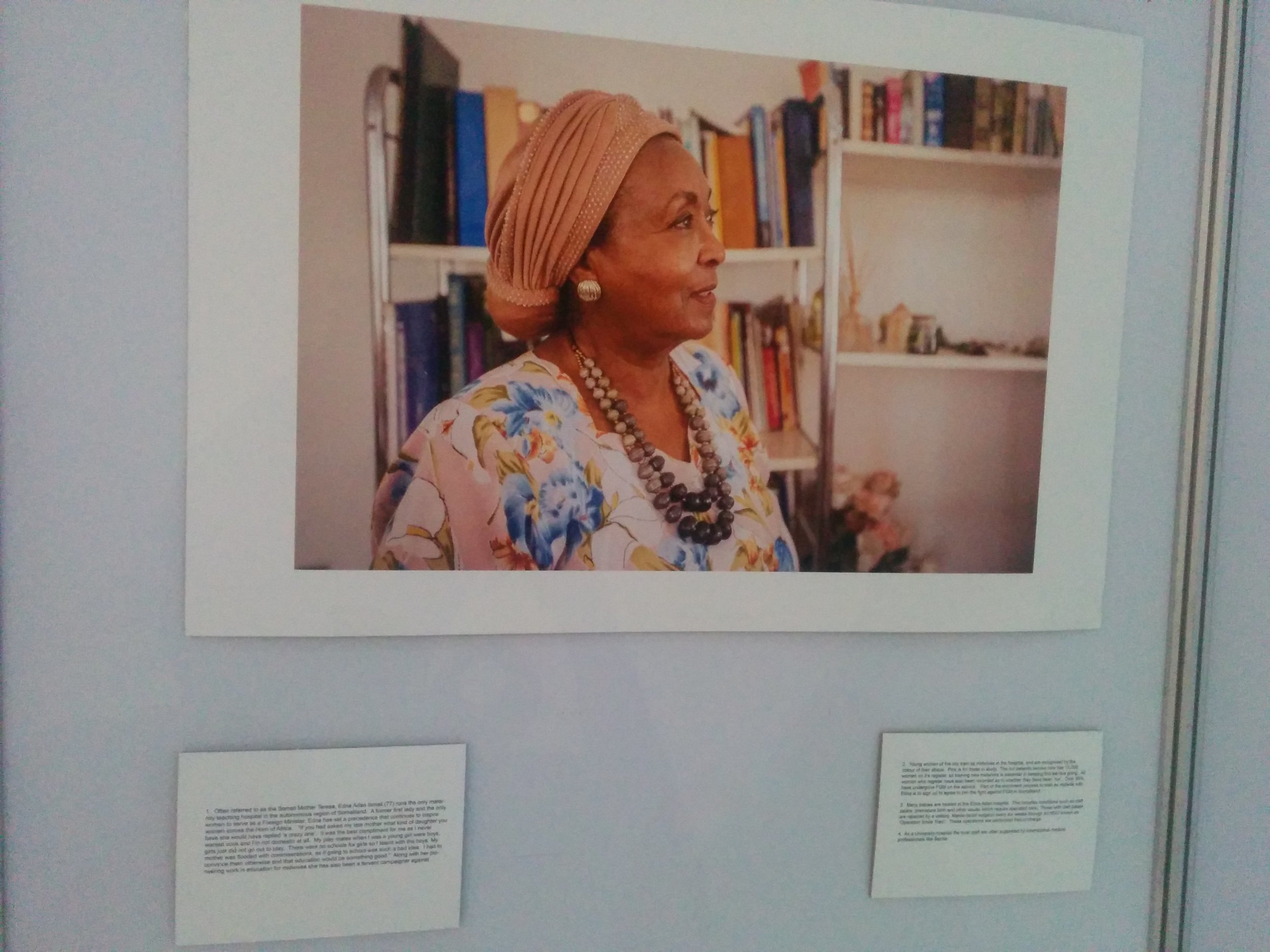
Edna Aden

Edna Aden embodies the Somaliland spirit of hope, tenacity and aspiration of a nation. A trained nurse, senior WHO official, first female Foreign Minister of Somaliland, activist and sincere advocate of women’s rights. After a successful career at the WHO, Edna invested her personal wealth and knowledge to reduce the staggeringly high levels of preventable infant and maternal mortality in Somaliland. She has built Somaliland's first hospital and is training 1000 midwives. 

"There are two diasporas - the diaspora who remain and the diaspora who return to their home countries."

"We have to respect the knowledge and lived experiences of ALL people"

"We need to open up spaces to brothers and sisters doing the work rather than owning these spaces ourselves. When Eritreans are drowning in the Mediterranean, it's my phone that The Guardian calls...."

Hannah Pool

Hannah Pool is an Eritrean born British journalist and curator. Her memoir titled "My Father's Daughter" is simply riveting. Snippet below from her true story. 

"In 1974 Hannah Pool was adopted from an orphanage in Eritrea and brought to England by her white adoptive father. She grew up unable to imagine what it must be like to look into the eyes of a blood relative until one day a letter arrived from a brother she never knew she had. Not knowing what to do with the letter, Hannah hid it away. But she was unable to forget it, and ten years later she finally decided to track down her surviving Eritrean family and embarked upon a journey that would take her far from the comfort zone of her metropolitan lifestyle to confront the poverty and oppression of a life that could so easily have been her own."


**

"A story that needs to be told, never forgives silence"

Okey Ndibe

Okey Ndibe is a novelist, political columnist, and essayist.  He is the author of the highly acclaimed novels "Arrows of Rain" and "Foreign Gods Inc," among others. 

"I would rather stay in a cocoon and not flourish than live in a society that is corrupted."

Chuma Nwokolo

Chuma Nwokolo is a highly acclaimed Nigerian poet, writer and editor of several novels including "Diaries of a dead African", "How to spell Naija", "The ghosts of Sani Abacha" etc. He is also currently proposing a revolutionary bill called "Bribecode" that could deal with the issue of corruption in Nigeria. 

"I came up with my first poem at the age of 8 when I was lost in the wilderness, all alone and I needed to communicate with the animals not to harm me."

Hawo Jama Abdi

Hawo is a  young female poet and a disability rights activist who was born blind

"Telling us to talk about Nigeria in an hour is similar to placing an elephant in the middle of the market and giving us small knives to carve it up with."

"We are culturally incapable of brevity"

"We have imbeciled ourselves by assuming we can't learn more than one language."

"If you have to eat a toad, you have to eat a big one."

Professor Niyi Osundare

Prof. Niyi Osundare is a prolific poet, dramatist and literary critic

"Stories have a lot of moral lessons. It's an important way to impart lessons to children."

"When you bully someone, it's similar to crumpling a piece of paper. You can unfold it, but the creases remain."

Maimouna Jallow

Maimouna is a writer and curator of stories focusing on Ancient Tales of East Africa.

In Somaliland Tags Hannah Pool, Edna Aden, Somaliland, Hargeisa, Hargeysa, Hargeysa International Book Fair, HIBF
Comment

Arriving in Somaliland

November 15, 2016

I woke up around 5am in Addis - had a hurried breakfast then left for 8:30am flight to Hargeisa. I got to the airport and most of the women were in full hijabs. I was wearing diracs that I had bought from a kind Somalilander woman in Eastleigh called Fardowsa. She had assured me that this would be appropriate dress code for Hargeisa. Now that I was standing at the airport in a sea of women in full hijabs I began to get nervous that perhaps I had not bought appropriate clothing for my trip. 

We got on the plane. First and business class was all white people. I figured out they must all be working for development agencies. Economy class was the rest of us:-) We got to Hargeisa around 1pm. I arrived and met a really friendly French girl who was attending the festival. As we were chatting, we bumped into a very well-known Malawian professor of literature - he used to be a judge for the Caine Prize. I love literary festivals - you get to rub shoulders with the most fascinating people. I have found African writers to be the least pretentious people i've ever met. Maybe it's because as writers you might get fame, but very rarely have the fortune. I get the feeling that festivals with musicians or actresses would be more hierarchical - with the more famous artists not really mingling with "the watus." In literature festivals, all of you get to interact. As a new writer, I always feel so fortunate to be in the midst of people whose work I have admired for a long time and be sharing a beer or a rolex (egg rolled in chapatis,) and talking like old friends. Writers are also wacky - so I always feel quite at home at literature festivals, as I have always been a bit of an odd-ball.....and the conversations are the best!

The Malawian professor had arrived but all his luggage was lost. We got out of the airport and I remember wondering why there was no real customs check. We just landed, got our bags and left without anyone searching them. We got to the hotel -  a really lovely comfortable hotel. I slept for half an hour then went down to  the reception for lunch. I met some lovely Kenyan ladies who work at the Rift Valley Institute. My head scarf game was not yet on point. I had done a very traditional head scarf style that covered all my hair, my ears etc. I figured it was better to err on the side of too-conservative in the beginning then look around and see what everyone else was doing after a few days. Unfortunately I had tied my headscarf so tight that I couldn't hear anything well, my neck was hurting, breathing became a bit labored and I could not eat.....Rookie error. I had to excuse myself from lunch to go and tie it in a way that could allow me to function...

We left for the festival grounds. I stocked my books at the official festival bookshop. As I was walking around, I found another bookshop stall. The owner called me over, looked at my book and asked for 10 copies. She gave me $100 immediately for the books. I was really impressed. Most times at festivals, you stock your books and only get paid at the end for what sells. I had always heard that Somalis are the best people to do business with - and now I was seeing it. No haggling. No "come back after a few days we discuss", No "we will see" - Just "How much is it? Ok. Give me 10 copies - here is  your money." It has a lot to do with how tight family and clan relations are in Somali culture. A lot of Somali businesses are ran on trust rather than on official contracts.  People don't want to betray that trust because you not only bring shame on yourself, but shame on your family, your clan etc. It could explain the success of Somali money transfer businesses such as Dahabshill or Somali prowess in in international logistics e.g.  Salihiya cargo - that can get your stuff from locations the world-over to their warehouse in Nairobi. They are able to use the global Somali network of relatives to ensure logistics is flawless. The other thing about Somali businesses - especially retail - they are highly price competitive. When I went to South C to buy my diracs, I was so surprised to learn that each would cost me $3 for the fabric and $0.50 for stitching. I could not even negotiate. Where else are you going to buy a full outfit for KES 350? Only in Eastleigh..The customer service might not always be that great, but hey - many places have horrible customer service and still charge you an arm and a leg. 

I stayed on for a session on ancient manuscripts and a Somali play that I'm not quite sure I understood. It was in Somali.  I think it was about a fight between animals, but I could also just be making this up given how little I understood:-)

Everywhere I looked around at the festival, I saw the most beautiful women in the most amazing fabrics. Fardowsa had been right - my diracs would be quite at home here in Hargeysa.  I remember every single Somalilander I met saying "Thank you for coming to Somaliland." It just made me feel so warm and fuzzy inside that someone would thank me for coming to a festival I had been dying to attend ever since I first heard of it. 

No - thank you Somaliland and thank you Hargeysa International Book Fair for having me. 


In Somaliland Tags Somaliland, Hargeisa, Hargeysa, HIBF, Hargeysa International Book Fair, travel, traveling, trip, African literature
2 Comments

Somaliland is not a fancy name for Somalia

November 8, 2016

Can you imagine the first time I learnt about Somaliland (and the fact that it wasn’t just a fancy name for Somalia) was at the end of 2014 when I was dating a Somali-British guy who had been born in Somaliland? All this time anytime I heard about Somaliland, I thought it was another name for Somalia. Similar to Cote d’ivoire = Ivory Coast or something like that.

Anyway fast forward a few years and now I was living life as a proper fiction novelist – traversing the African continent for book launches, literature festivals etc. I heard about the Hargeysa International Book Fair and how amazing it is and decided I have to get invited. I’m a bit of a stalker, an optimist and have wide networks -  so the time lag between me hearing of something and getting there is usually not that long:-). I know I am lucky and I never forget to appreciate it and be helpful to others whenever I can.

I got to the airport for my flight to Hargeisa and realized I had left my specs at home. This was not going to work out – it was one of the rare instances I was flying wearing contacts (dailies.) I paid my cab guy double fare for him to go back home and bring me the stuff I had forgotten on my bed. I got to the airport and I had so much wahala – I had my flight details sent to me but the flight details they had at the airport had the wrong name. My flight had unfortunately been booked under the name I commonly use – Ciku Kimeria – rather than my passport name. I had feared this and had reminded the organizers a few times, but it happens. It’s an honest mistake – people assume that my chosen name is also my “Government” name. I was desperate to get on that flight as I had heard there are not that many flights on that route. I pleaded with the airline people – please call the travel agent who booked the flight (as they had those details on their end.) On my end, I was desperately contacting the festival organizer. These were the least helpful airport people on earth. They did not seem to recognize the urgency of my issue. The lady was typing slowly, asking silly questions etc. then finally it happens, “Yeah. Your flight has left you!”

Aaaaaaaaaaarrrrrrgggggh

So I end up being sent to the Ethiopian Airlines office in the airport – they were even less helpful than this lady. “From this office we can only send emails – no calls”…Like….seriously?? So they could only send an email to the Ethiopian Airlines person in Hargeisa who had to change my details – then we wait – me chewing my nails, her filing hers (ok…just kidding, but she might as well have been doing that for how laissez-faire she was.) No response to the email. Finally I let her borrow MY cellphone for her to call their Hargeisa contact who would change my flight details. My flight had left at 1pm and all this foolishness was only resolved at 3pm. I was finally sorted out and booked on a 5:30pm flight to Hargeisa with an overnight stop in Addis.

I found mypal – James Murua – literature blogger extraordinaire also stuck at the airport. He had arrived in the morning for yet another flight to Hargeisa (also to attend the festival) and the airline had told him the flight had been cancelled. Not a small issue – his airline only had one flight a week to Hargeisa – meaning even if they bumped him to the next flight, he would miss the whole festival.

We did the only logical thing to do when you’re stuck at the airport and have nothing to do, but wait…we drank – 5 or so beers each – to lighten the load.

Finally managed to check in for the 5:30pm flight to Addis. We got to Addis at 8pm. There was an airport shuttle to the hotel I would be spending the night in – I sat and waited in this airport shuttle for 50 good minutes. By this point I was so tired and ready to get my own taxi to this hotel. I would have to leave the hotel at 5:45am for my next flight to Hargeisa and these people were wasting my precious sleeping time. At the hotel I quickly ate then went to the room to sleep. This was the coldest hotel room of my life in the global South. Actually I don’t think I have ever been in such a cold hotel room even in the North – because if it was winter, there would be a heater in the room. Ah – actually I’ve been in a colder room, but that was in the Bolivian desert. There was a good excuse for it to be cold. Hotel room in Addis – what’s your excuse?

I requested a blanket and waited another hour for it to come. I was so irritated by the time I slept..especially knowing I needed to be up in five and a half hours. 

In Somaliland Tags Somaliland, Hargeisa, Hargeysa, HIBF, Hargeysa International Book Fair, Hargeisa International Book Fair, traveling, travel, travelblogger, literature, African literature, Fiction
Comment

Why going to the Hargeysa International book fair should be on your bucket-list

October 31, 2016

With the Hargeisa International Book Fair gaining more popularity in the recent past, there is interest from many to know more about this undiscovered gem and also the little known country behind the festival.  

Do not consider yourself naïve if this is the moment you learn that Somaliland is not just a fancy name for Somalia, but rather is an autonomous region that has been existing peacefully for over 20 years – yes, 20 years. If it comforts you I was as clueless as you likely are about Somaliland’s existence up to a few years back. Once I came to terms with the fact that the world as we know it was hiding lots of useful information from me, I was further amazed to find out that one of the region’s most spectacular and well attended book fairs takes place every year in the capital of Somaliland – Hargeisa. With that I vowed that I would attend the book fair and discover what all this was about. I was extremely fortunate to attend the Hargeysa International Book Fair (HIBF) in August 2015 and here are the key highlights of it for me as a non-Somalilander.

The flowers of Hargeisa – its women and their brightly colored outfits: I had not been quite sure what to wear in Hargeisa. A week before my trip I went to Eastleigh in Nairobi to shop for diracs. I found myself at the shop of a lady from Somaliland called Fardowsa. Her fabrics were beautiful and brightly colored. I have nothing against bright colors, but the last thing I wanted to do in Hargeisa was be in any way inappropriately dressed. I knew that the dressing would be quite different from that in Nairobi, and I did not want in any way to look like a silly foreigner. Fardowsa assured me that the outfits she had picked for me were quite acceptable, but I was only sure of this once I got to Hargeisa. The women wear the most amazing fabrics and colors. I had never ever used a headwrap in my life, but in Hargeisa I learnt that there are ways to wrap your hair that are quite fashionable. The real flowers of Hargeisa are indeed the women. It was great to see HIBF celebrate this women with a colorful exhibition titled “The flowers of Hargeisa” that featured women making a difference in Somaliland.

Sitaad (religious drumming by Somali women) inspiring nationalistic pride in Hargeisa. Of course, I was dying with curiosity to watch Sitaad drumming at the festival. We had been repeatedly told that Sitaad was a music form exclusively performed by women – a sufi Islamic practice interlinked with spiritualism and one of the few public artistic outlets that allow women to bring up issues affecting them and explore issues of fidelity, peace, philanthropy etc. My curiosity was piqued. It was wonderful to be invited by Somalilander women to join them in the dance. The most beautiful moment was when a Somaliland flag appeared out of nowhere, the room was in a state of frenzy, the drums grew louder, the women singing asked in Somali – “Whose flag is it?” The response “SOMALILAND!” “Whose country is this? “SOMALILAND” Whose constitution is it? “SOMALILAND”. I was entranced by the nationalistic pride that revealed itself through Sitaad. Now I knew why guide books talk about Sitaad as having the ability to get participants into a state of “ecstasy” and “spiritual intoxication.”

The blind poet who composed her first poem at the age of 8 while lost in the wilderness: Once upon a time an 8 year old blind girl was accidentally left behind by her nomadic family in the wilderness as they moved to another location. In a state of fear, this little girl heard the laughter of hyenas around her, sounds of the wild terrified her. To calm herself, she recited a poem to a hyena close to her. She eventually made it to safety and credits the poem with enabling her to “speak to the wilderness.” This is not a fairy tale – this is the true story of a young Somalilander poet by the name Hawo Jama Abdi. Listening to this girl’s story (in translation as she was speaking in Somali,) was extremely captivating. The power that art has to strengthen, to heal and to inspire.

Women of the World (WOW) session in Hargeisa: One afternoon, we had a lovely session with women from Somaliland, those from the diaspora and those from elsewhere on the continent and beyond. It was wonderful to hear women young and old voice the challenges they face as a result of gender discrimination. What was even more inspiring was hearing the stories of those who have defied the odds against such discrimination. Somali women who have opened and run very successful businesses in Hargeisa despite some of the backlash they face, great women such as the 78 year old Edna Aden – Somaliland’s first foreign minister, a trained nurse, senior WHO official who is currently building Somaliland’s first maternity hospital. Women who have fought and continue to fight the good fight for gender parity in their communities.

Long lunches, tea-time discussions that we hoped would never end and evenings spent chatting up to 2am: The discussions at literary festivals are one of the most exciting aspects of the fair. I can’t count the idle hours spent discussing everything under the sun with the likes of Chuma Nwokolo, Dr. Mpalive Msiska, Prof. Osundaro, Okey Ndibe, Nadifa Mohamed, Quman Akli, Dr. Siham Rayale, Maimouna Jallow, James Murua, Hannah Pool, Zahra Jibril etc.

Henna at the salon with festival guests including Nadifa Mohamed and Hannah Pool: I can unashamedly claim that one afternoon in Hargeisa, I got to visit a henna salon with Nadifa Mohamed (“Black mamba boy”, “Orchard of lost souls”), Hannah Pool (“My father’s daughter”) and other wonderful guests and spent a few hours getting henna tattoos on our hands.

Laas Geel – prehistoric paintings in caves and rockshelters: While this is not part of the festival in any way, being in Hargeisa gives you the ability to take a one hour drive to caves with rock art that dates between 9,000 – 3,000 BC. The rock art is among the oldest found in Africa. It has been recommended that Laas Geel be protected as a UNESCO World Heritage site, but due to the regions complicated diplomatic situation, the area has been left to its own defenses. The over 5000 year old rock art in the caves is in remarkably great shape, but it is unsure how long the site will be able to remain as it is without formal protection.

Love of literature: A friend who attended the HIBF in 2014 told me about one day when Somaliland’s most famous poet – Haadrawi – performed. She is also Kenyan and could not understand his poetry in Somali, but was amazed by how captivating he was. She looked around her and the huge venue was full – there were people on the windows. Outside there were people sitting on trees trying to hear him recite his poetry. This image for me is a testament of the love for literature in Somaliland. Students bought books of other African authors who they had only recently met at the festival. Thousands attended the different sessions – even those who did not speak English perfectly, still attended the English sessions and engaged as much as they could. It was simply inspiring – especially thinking of similar sessions in Nairobi where one normally sees the same faces and starts to wonder if it will ever be possible to fill a huge auditorium unless you are Ngugi wa Thiong’o. The selection of books available in Somali was also quite surprising – the realization that so many people write and read in their local language.

Warmth & hospitality: Only in Somaliland can you get to a shop, not have enough money for your purchases, try to take some back and have the person at the till tell you, “No, it’s fine. This is enough.” It was one of those moments – we were enroute to Laas Geel and stopped at a shop to buy water and other things we would need for the journey. At the till I realized I didn’t have enough money and attempted to take some things back, but the person serving me would not allow that. I left the shop feeling terribly guilty. “How could they let me pay them less?” My Somalilander companion told me, “That’s normal here. If you go into a shop and you clearly have an emergency, they can even let you take things for free.” I had no words – leaving a shop without paying? Not in Nairobi! There were so many instances when I felt overwhelmed by the warmth and generosity of people. During my sessions at HIBF, every Somalilander’s question began with “I thank you for coming to Somaliland.” It was said with such genuine warmth that I really hoped I was a worthy guest -  at least a guest deserving of all the praise.

In Somaliland Tags Somaliland, Hargeisa, travel, travelblogger, travelling, traveling, HIBF, Hargeysa International Book Fair, Hargeisa International Book Fair, Laas geel, Hannah Pool, Nadifa Mohamed, Haadrawi
Comment

Highlights from Writivism festival in Uganda

October 25, 2016

As a new writer on the scene, I have been quite fortunate to attend a few literature festivals in the past years. Every time I hear of a new festival, my heart skips a beat as I wonder how to get myself invited. I cherish these opportunities to meet with like-minded individuals, expand one’s networks in the writing world and get to discover really amazing books that I might otherwise not have come across. Of course it goes without saying that also the opportunity to get signed copies of books from amazing authors I have only seen on TV or read about in magazines and newspapers is an obvious bonus to the whole experience.

While I still need to write lots more about my time at Writivism Uganda a few years back, here are some few highlights:

Room 124, Minister’s village: The Kenyan in me ended up having a room party the first night in Kampala – and most other nights. I recall looking around my tiny room at one point and seeing Mukoma wa Ngugi, Pa Ikhide, Renee Edwige Dro and Donald Molosi. I remember thinking how happy I was to be in such great company. What had started as a tiny room party with Moses Kilolo and Ndinda Kioko had morphed to become a party with great literary giants of the continent – all in my tiny room – 124.

Re-enactment of Jennifer Makumbi’s commonwealth prize winning short story “Let’s tell this story properly” by high school students: I get very flattered when someone quotes a line from my novel “Of goats and poisoned oranges.” I could only imagine what was going through Jennifer Makumbi’s mind as high school students got on stage at the Kampala national theater to dramatize her most famous short story. It was beautiful to see contemporary African literature being brought to life by high school students in the country of her birth – Uganda

Today it’s me – a Motswana playwright and director bringing to life the story of Ugandan musician and HIV/AIDS activist Philly Lutaaya: If someone told you that an actor and playwright from Botswana spent 4 years writing a play about a very beloved and tragic figure from Uganda, learnt to sing all his songs in Luganda, picked up a Ugandan accent, spent time with his family to fully understand the man that was Philly Lutaaya – what would you do? You would likely want to see this play. Watching an African honor another African from a different country in such a respectful manner, telling his story with an African voice was simply inspiring. Be warned though – when you plan to watch Donald Molosi’s play “Today it’s me,” carry lots of tissue with you.

Sessions under trees at Maeesha gardens and at Makerere university: While Maeesha gardens was extremely hard to find, having sessions on Afrofuturism under an open sky (Renee Edwige Dro, Rachel Zadok, Ikhide Ikheloa, Moses Kilolo), blogging masterclasses (James Murua, Nyana Kakoma). The sessions at Makerere held historical significance given this was the exact same venue where Chinua Achebe, Wole Soyinka, Ngugi wa Thiong’o, Bloke Modisane, Robert Serumaga and other greats attended the first conference of Anglophone African writers. Sitting in the same venues where these literary giants sat and having sessions such as “From the bedrooms of African Women” by Nana Darkoa, “What do oil resources mean to African writers” by Richard Ali, Writing an African historical novel by Jennifer Makumbi – was simply surreal.

A night of intense debates at 822 Terrace: I will always laugh when I recall this night. They switched off the lights and we never left. They stopped selling drinks and that did not chase us away. When writers talk, we talk and talk. Sometimes it gets heated, but as long as the group is respectful, everyone leaves as friends even if they don’t share the same opinion on various topics. 

In Uganda Tags Writivism, Festival, Literature, Writing, Africa, Uganda, Mukoma wa Ngugi, Pa Ikhide, Renee Edwige Dro, Donald Molosi, Today it's me, Jennifer Makumbi
Comment

My first literary festival – Storymoja in Kenya

October 18, 2016

This was a few years back – and it was the first festival that plunged me into the writing world. Muthoni Garland was the first festival organizer who decided to take a chance on me and my novice self – including giving me a panel with Kenyan literary greats. I was humbled and still look back at that opportunity with so much gratitude.

Still lots to be be written about that time at Storymoja but my top memories are below:

Attack of the Shidaz; I loved watching Muthoni Garland’s play at the festival. The performers were excellent and made her writing come to life. I really admired how they were able to engage the audience and have us become part of the performance.

The authors’ room at the venue: I loved this space. Friendships were made and cemented in this room. This is where I got to meet the likes of Harriet Anena (“A nation in labor”), James Murua (“Nairobiliving” “JamesMurua.com”), Beverly Nambozo, Alex Nderitu (When the Whirlwind Passes), Ndiritu Wahome, Kinyanjui Kombani, Juliet Barnes, amongst others. The friendships I made in this space have led to lots of other interesting opportunities (interviews, referrals, festival invites, drink-ups etc.)

Uliza Kiatu, H_art the band: This is not even my own memory, but one from my mother and my sister. They keep speaking about how they heard some heart-tugging guitar chords being played, turned around and found H_art the band playing their amazing hit “Uliza kiatu” right next to them on the grounds. These are the types of things that happen at Storymoja – you never know what amazing performance could be starting right next to you.

Wole Soyinka keynote address: You have never seen a full parking lot until you have seen the parking lot on the morning of Wole Soyinka’s keynote address. Seeing the legend in person would have been enough of a memory to take to my after-life even if all he did was just stand there and smile. Seeing him in person and hearing him touch on topics that are so dear to my heart – him reflecting on the Westgate terror attack that took place during the previous year’s Storymoja, hearing him pay homage to all who died during the attack – including the great Ghanian poet Kofi Awoonor and hearing him talk about issues that really spoke to my soul were almost too much to take. To date, my favourite non-fiction work of Soyinka’s is still “Climate of Fear” from the Reith lectures. It was an honor to see him echo sentiments from this timely piece in person.

Seeing Vuyelwa Maluleke – an amazing South African performance poet in person. It was the night of the gala – all the VIPs and VIIPs were gathered there. I am not actually quite sure how I managed to get into the gala. All I know is that the moment I fell in love with poetry (and began to see it as something other than the never-ending torture it had been in high school) was somewhere between seeing Vuyelwa perform at the gala and meeting all these other amazing African poets who brought poetry to life. She performed “Big girl” and I fell in love. Since then I have become obsessed with her other poems including   “Hair” and “Big school.”

In Kenya Tags Kenya, Storymoja, Festival, Literature, Wole Soyinka, Attack of the Shidaz, H_art the band, Vuyelwa Maluleke
Comment

Last days in Comoros

October 11, 2016

It was a Friday. We had lots of morning meetings then I came back to the hotel around midday as everyone went to the mosque for prayers. After lunch, I decided to go to the bank to change money. I was running out of local currency. There was a super long line at the bank. All of a sudden a guy came into the banking hall and spent half an hour or so yelling at another guy. We all just watched – no one came to pull him away or kick him out. A lady later whispered to me that it was an altercation between employer and employee. The employee had checked his account and had not yet been paid in full.

I got back to the hotel only to realize I had actually not changed enough money. I was off by a factor of 0. Oh boy! Who was going to go back to the bank? I went to the hotel reception to see if they could assist me. Quite coincidentally there was a gigantic guy sitting at the bar throwing back some whiskys (on a Friday afternoon – do you boo boo.) Spyros heard me asking the bartender about changing money at the hotel. Spyros turned out to be a half Greek – half Tanzanian clove trader who was more than happy to take my dollars and give me Comorian francs. I changed 400 USD with him and I was really impressed by how quick it all was – and what a fair deal he had given me.

The next morning we were leaving Ndzouani to head back to Grand Comores (Moroni). The airport was hectic. Everyone was rushing to us giving us packages to take to people in Ndzouani. Comoros kept on reminding me of what the world was when we all trusted each other. My gut instincts is – stranger at the airport giving me a package – wants to make me a drug mule. My travel companion though happily took everyone’s package. One of the packages was from an old man. It was an envelope containing his passport that needed to go to the Malagasy embassy in Ndzouani – and money. Just how trusting are people? I can never imagine giving someone my passport.

Today again we had the same female pilot from Malindi. Saturday was a work day for us in Comoros. I was struggling getting used to this system. By the end of Friday, my body generally crashes and I want to have “me” time for the weekend – not have stakeholder interviews. Our morning in Ndzouani started with Government meetings that took almost 3 hours.

Lost in translation. I remember on our drive to the Government meetings, our car was booming Eamon’s “F*** you” None of my travel companions was Anglophone – as such none of them seemed to realize what the lyrics were. I find it quite hilarious how curse words can only be fully appreciated by those who speak the language well.

After that my field work was officially done. I found a lovely hotel and had a 4 hour lunch – including a beer or two.

I left Moroni for Nairobi the next day. It had definitely been an interesting time in Comoros.


In Comoros Islands Tags traveling, trip, Africa, Comoros, Comoros Islands, Moroni, Grand comores
Comment

The school at the top of the mountain and other scholarly tales

October 4, 2016

Today was an early day. We were up and about by 7am distributing surveys. Surveying a third of the schools in a country (albeit a small one) is no mean feat. Something had been getting on my nerves for a while and I finally told my travel group about it. We would be driving with a plastic bag for trash. Whenever we would get on the main road, the local consultant would just chuck the trash out of the window. Juste comme ca. I HATE littering. How don’t people connect in their minds the link between their individual actions and a polluted environment. If you are reading this and you are the type who throw trash anywhere other than a dustbin – stop it! You are not being a good citizen on the world. The group was so surprised that I thought littering was a big deal. People – we can do better.

Anyhoo, one of the schools we visited today was on the top of a mountain. We drove up as far as we could then we had to get out of the car and walk up the rest of the distance. I died a thousand deaths – it was crazy hot, I was in a work suit and I HAAAATE elevation. I’m done with mountains. I’ve been done with mountains for a long time, but they are not yet done with me. I got to the top of the mountain huffing, puffing and sweating buckets. It was not a pretty sight. Thankfully I was in flats – I only wear heels for field visits when we have Government meetings in a known part of the capital city. Otherwise I assume there might be lots of unplanned walking.

Finally we got to the top of the mountain. The people there were an interesting mix. This mountain was on the side of Comoros closest to Madagascar. As such, some of the people there looked Malagasy.

On our way back down the mountain, we gave two people a lift.  It turned out they were going to try and make their way into Mayotte for medical treatment using a pirogue. Can you imagine what types of problems it creates having a little piece of Europe right next to you? One poorcountry next to another that has the same people but is much wealthier and has all the amenities of a Western nation.

The next series of schools for the day were an interesting mix. There was one very remote one – when I took a few pics and showed the kids, they ran away – believing it was magic. That is how remote this area was – the kids had never seen a digital camera. I stopped taking pics as it got disruptive.

We went to pick up surveys in 10 other schools we had delivered them to and not a single one had been filled. Sigh. We got to schools where the Director could barely converse in French – and the surveys had been in French. Schools where barefoot children would run in and out of the director’s house like it was their mother’s kitchen. I concluded that corporal punishment doesn’t happen in Comoros (a good thing.) You would have caught me dead in primary (or high school) just sauntering into the headmaster’s office like that. Hell would have frozen over and some serious caning would await you (especially in primary school. High school was mostly for hot slaps that left your ears ringing.)

In Comoros Islands Tags Comoros Islands, Comoros, travel, traveling, travel blogger, travelling, Africa, Ndzouani, Moroni
1 Comment

Shikomori for beginners + Leaving Moheli for Ndzouani

September 27, 2016

Marahaba = Thank you (while in Kiswahili it is a response to a greeting, “Shikamoo” “Marahaba”)

Lala unono = See you later (while in Kiswahili it means “sleep well”)

Watiti = children (while in Kiswahili the word is watoto)

Fahamu = Listen/Pay attention/be cautious (while in Kiswahil it means “to know”

Fundi = teacher (while in Kiswahili it means “repairman” e.g. carpenter, plumber etc.)

Kizungu = French (while in Kiswahili it means “English”)

This last one in particular fascinated me. I realized kizungu in the Anglophone sense is English, only because the wazungus in our context were British, but in a Francophone sense, kizungu (i.e. the language of the wazungus) would be French while it would be portuguese in a lusophone context.

Someone needs to do a study on coastal people and mysticism. Before we left the hotel at Moheli, I ate breakfast by the beach. There was a certain guy on the beach who looked unstable. The hotel owner told me that he had stolen a mattress from his mother’s house. His mother had then gone to see a witchdoctor to place a curse on whoever stole the mattress -not knowing it was her son. Ever since that day, he had lost his mind. The hotel owner told me he also had a friend who stole a necklace from his own mother because he wanted to sell it and use the money to go to Europe (I’m assuming it was a very expensive necklace.) His stomach started growing and growing – finally he died. I vowed there and then never to steal anything from my mum -  and if I did, to make sure she doesn’t go to the witchdoctor.

We left the island of Moheli for Ndzouani on a Sunday morning. We got to the airport at noon even though the flight was at 3pm. It was a long wait. I was pleased to see a female pilot and co-pilot. After the flight I chatted a bit with the pilot and she was actually Kenyan -  born and raised in Malindi. On arrival, I met a lady who was half French, half German and I was so excited to speak in German. It had been a while. This was the first time I noticed my French was interfering with my German. It’s as if my mind only has space for one foreign language at a time.

I got to Hotel Papillon (butterfly) and it was ok. I spent the rest of the day resting – discovered our hotel had a bar later on and took the first beer of my time in Comoros. That beer felt so refreshing! You never miss the water till the well runs dry. 

In Comoros Islands Tags Comoros, Comoros Islands, Moheli, Ndzouani, travelling, travel, travel blogger, traveling, travelblogger, trip, vacation
Comment

Adjusting to a different culture and finally getting rid of a certain bugga--boo

September 20, 2016

The afternoon of the day The Terminator went hard on the non-compliant teachers was a Friday. At lunchtime, everyone went to the mosque for prayers. I was left at the beach to kill time – there are definitely worse ways to kill time:-). After that we went for lunch at a small roadside place. I had the most delicious fish ever – everyone insisted I should order it and said it was rare and a specialty in Comoros. It was called “poisson rouge” which translates to “red fish.” It was only months later during a French class that I learnt goldfish are poisson rouge. Comoros has rare goldfish that grow to a full size. That fish was delicious and so soft! There was a lovely baby at the restaurant. I could see the fascination in our driver’s eyes. He told me how much he loves babies – and he had many of them. When he had come to pick me from the beach earlier, we had met his wife and one of their small babies. He was such an affectionate father. Later on the streets we had met one of his daughters and he had called her over, hugged her tenderly, exchanged kind words with her and given her some money to go treat herself. Comorians were really warm. We kept on stopping everywhere along the way to give people lifts.

We had some official meetings later in the day. Given that some conservative muslim men don’t shake women’s hands, I had chosen to take the cue on what was appropriate from the interviewee. Most times I would simply bow my head and do a small hand wave. If they reached out for my hand, I would shake their hand too – but I would never stretch out my hand first – just in case they did not shake hands with women. You can imagine my confusion when one of our government interviewees cheekily asked me to kiss him on his cheek after a meeting. It was quite strange. It would have been less strange if he had just initiated the cheek kiss – a lot of Franchophones greet in this way – but asking for it just gave me a very creepy feeling….plus he was sitting down and I was standing – so I had to bend down to give this awkward kiss – with a few men standing behind me. I had already began to get self-conscious about my work clothes in Comoros. In many other countries, my work pants and skirts would be normal, but in Comoros the women generally covered up quite a bit and I instantly felt like my regular work pants were suddenly waaaaaaay too tight – when I compared them to the other women’s dressing.

On our long drive, we passed a lovely lady who came to greet our driver. Instantly from the way they interacted with each other, I knew they were an item. There is a certain energy that’s around two people who have a thing together. I think he noticed I noticed and decided to entertain me and the local consultant with the highlights of his love-life. Yes, this was his girlfriend. He has 2 wives, 2 ex-wives and 8 children in total. I have no idea how anyone manages all these close relationships. All those wives, lovers and babies. When do you sleep?

In Comoros, I also experienced for the first time the faux pas of not knowing how to behave in certain situations in a muslim country. For example, sometimes we would walk into a government building for meetings – find our interviewee in the middle of prayer and my first instinct would be to wait outside till they finished. My Comorian colleagues for the trip however would tell me it’s ok to wait in the room as the person finishes praying. I felt like I was intruding.

There was another thing in Comoros that I never quite figured out. Most of the areas we were visiting were extremely remote and we were using latrines. For some weird reason, all latrines had 3 holes. 2 small ones and a bigger one. What was that all about? One small one and one big one would make sense, but why the three?

Later in the day, the local consultant declared his undying love for me in a long soliloquy. I did what I usually do in such situations – I feigned ignorance and acted like I thought he was telling me all these things in a platonic way.

My salvation was to come later in the day. In the next island we would be in, the hotel I was to stay in was more expensive than the one he was to stay in (he had already been paid his part and that was to cover his accommodation too.) He tried to be cheeky and call our other consultant in Moroni to insist we need to stay in the same hotel so as to be more productive. He was told that this would only happen on his own budget.

When I met the local consultant after he had been told this news, he almost had tears in his eyes. I sympathized with him as much as was polite to do so, but secretly oh secretly I thanked God for saving me from all this awkwardness I had been dealing with in the past few days.

In Comoros Islands Tags Comoros, Comoros Islands, Moheli, traveling, travel, travelling, travelblogger, trip, Vacation, holiday, vacation
Comment

Ni kama vindeo - ni kama ndurama

September 13, 2016

Today morning, the first issue we had was finding fuel. There was a fuel shortage and we desperately needed to fill up the car tank or we would not be able to make it for our meetings. We ended up at a petrol station that looked like the back of someone's house. A huge jerrycan came out of nowhere, we filled up and left for our meetings.

Previously we had distributed surveys that needed to be filled out by 3 people at each school - one by the teacher of CP1 (standard one), CP2 (standard two) and the Koranic pre-school teacher. Today, the head of the teachers' association was joining us as we went to pick up the surveys. Heads would roll. 

School one - Not a single survey had been filled in. We patiently sat as they started to fill them out. The head of the teachers' association had to explain some of the French to the teachers. 

School two - The School Director is not around. None of the teachers are to be found. Head of teachers' association asks for directions to the school director's home. He is at home fast asleep - from what I gather standing outside his house with my extra survey copies. Our guy - who I shall now call - The Terminator - yells at him. Orders him to get in our car and take us to find the other teachers. On our way there, The Terminator sees one of the teachers we need on the road. You can tell from his disheveled look that he's heard trouble is in town. The surveys! Where are they? He sheepishly hands us blank surveys. The terminator gets out of the car gives the guy a dressing down and orders the director out of the car. He tells them that they must get the surveys back to our hotel by end of day. 

I am now so exhausted from all the unavoidable drama. It's lunchtime and we haven't yet had a chance to eat. We need to drive a few hours to our next meeting. On the roadside, we stop by a coconut plantation. The Terminator calls some young boys from the roadside and asks them to climb up the tree and get us some coconuts. I'm still trying to figure out if he knows these kids - as they obediently climb up the trees. This is not the first time i've seen people stopping random people and asking for favors that back in Kenya would get you looked at as if you have totally lost it. I guess it's beneficial when there are few degrees of separation between people in a country. Anyone could easily be your relative and as such the only thing that is important is seniority. Kind of similar to how in Kenya upcountry, anyone can send anyone's child - because if you refuse to be sent - you know information will get back to your parents....Try that in Nairobi....Woi!

Why did I refer to the day's drama as unavoidable? So many factors. One - the project I was working on was the evaluation of a program that had funded a major revamp of the curriculum in Comoros and provided tools that were used throughout the country. The Terminator felt that it was a personal insult to the funder for the beneficiaries to not even spend 5 minutes to respond to a nationwide survey knowing well how the education system in the country was underfunded and how much it really depended on external funders. 

Two - did I really blame the teachers for sleeping when they should have been at work or farming? Would you keep going to work if your boss didn't pay you for 3 months? Then why do we expect the same of teachers and some other civil servants. They are human too. If they can't pay their bills by doing their job, are you going to stop them from dedicating more time to their farms - at least there they can earn a living.

Finally though, due to all these problems is it fair for children to not have the same chance to excel in Comoros as in other countries because they spent a significant amount of school time without teachers, materials etc? In the long run, it is these young children who suffer when systems fail them. I was a young African child once. Where would I be if my teachers more often than not were on strike. Don't get me wrong - teachers went on strike a lot when I was growing up in Kenya - including the year of my high school examinations. Even then these were fortunately exceptions. I was also fortunate enough to be from a family that could afford to pay for holiday tuition to strengthen my skills when schools closed. Textbooks were expensive, but we had them. We had power blackouts too, but again these were the exception - not the norm.  Teaching at that time was still viewed as a profession to be admired - as such we had qualified teachers. We were therefore positioned for success. When conducting this project and another one in Kenya that had me visit informal schools in Kibera and under-a-tree type schools in Turkana, I realized that for so many children - going to school is a privilege, having the resources to survive there is a dream, thriving is a miracle. I remember the kids I saw in Turkana who studied under a tree with only a very thin sheet above them - hearing stories from the teachers about how sometimes some of them passed out due to heat exhaustion....We should do better for the next generation. 

It's very easy to get caught up in politics - in whichever country we are in, but I want us to think of the real lives that are affected when systems fail. 

This picture above gives me hope. Little girls in school - something that most of us take for granted. Millions of children around the world will never get the opportunity to step into a classroom and most of those children are the ones who stand to benefit the most from accessing the great equalizer that is education - marginalized children from impoverished communities in poor countries - triple jeopardy. When I look at Nimroh and Hanissah I am hopeful about the future of my continent. In this little girls I see future Nobel prize winners, agents of positive change in this world, I see hope cloaked in the body of a 5 year old girl from a village no one knows exists but whose name she will one day put on the world map.

In Comoros Islands Tags Comoros, Comoros Islands, travelblogger, travelling, traveling, travel, travel blogger, trip
2 Comments

Those moments you wish you had just spoken your mind

September 6, 2016

I was to wake up at 6:30am today to be ready to leave early for meetings. My alarm clock did not go off. I woke up much later when the local consultant was banging on my door. Such a fail - almost late! I ate breakfast in a rush. We drove for hours to get to our first meeting. 

Our first meeting was rough! The sun was hot and the interviewee had the most soothing voice I have ever heard in my life. The head of the teachers' association had tagged along with us for meetings that day - the nice old fiery guy. Quarter way through the interview he fell asleep. The local consultant had discovered there was wifi in this particular school we were at - which was surprising to me too. We were in a very remote area but the wifi was perfect. He spent the rest of the interview on his phone. I was so irritated but didn't know what to do. I needed him to ask the questions - which he did - but he would immediately go back to his phone - which was both rude....and frustrating for me - as it meant I was left to my own defenses to understand the responses. 

After this meeting, we had a three hour drive to the next meeting. The views were stunning but I began to worry how much work we were actually going to get done in my 2 weeks in Comoros - if the distances between my meetings were so long. This second meeting was only attended by the local consultant and myself. After the meeting, once we were walking out of the building to our ride he tried to hold my hand and walk hand in hand. I was so creeped out. I just quietly pulled my hand away, but didn't say anything. In retrospect I realize this is where I should have given him a piece of my mind, but I kept on justifying his actions to myself. "Well, it was just a hug and now he's trying to hold your hand. Maybe it's the culture here?" Now I realize, if something makes you uncomfortable, it makes you uncomfortable and you don't need to go through it without speaking your mind, "to avoid problems." No one should make you uncomfortable and if they do, you should let them know.

This was a Friday and work hours in Comoros are 8am - noon on Fridays then 3-5pm - so it turned out we really hadn't wasted time going from place to place. We would not have been able to have meetings either way. 

We get back to the hotel and have a delicious snack of hot milk with cardamon and something else I don't recognize, but find quite delicious. I decide to take a walk on the beach around sunset. Shortly after - he arrives. He asks if I want a picture of myself on the beach. I gladly accept - only to remember immediately after, that this might become another awkward moment. I find it hard to pose as I normally would - because now the person behind the camera/phone is looking at me with a bit too much excitement. He insists on taking the pictures with his phone and whatsapping them to me whenever we find wifi....even though my phone has a waaaaay better camera. When I go to look at the pictures on his phone, he tells me something that I don't quite understand but bit by bit I realize he is telling me, "You have a great figure - not too fat, not too skinny."

Yuck!

I go to bed later that night wondering how some men have the ability to make you feel dirty simply by looking at you.

In Comoros Islands Tags Comoros, Comoros Islands, Moheli, travelling, travel, traveling, travel blogger, travelblogger, trip
Comment
← Newer Posts Older Posts →
Amsterdam.JPG Arembepe beach.jpg Bahiana beauty.jpg Berlin Communist pic.JPG Berlin Schloss.JPG Colloseum.JPG Convertible pic.jpg Copenhageen.JPG Cristo redentor.jpg Desert tracks_Bolivia.jpg DSC09058.JPG DSC09343.JPG Dune and Kenyan flag.jpg Eiffel Tower.JPG Ferris.JPG Graffiti.JPG Hungary.JPG Lake Titicaca.jpg Lindi.JPG Louvre.jpg Oktoberfest.JPG Oktoberfest2.JPG old couple tango.jpg Paris.JPG Qatar.JPG Ricoleta cemetery floating lady.jpg Ricoleta cemetery mourning ladies.jpg Slovenia.JPG St Michael.JPG Storymoja pic_Ciku Kimeria.jpg Vatican.jpg Yamoussoukro.jpg Zambia.JPG
  • Africa general
  • Argentina
  • Austria
  • Benin
  • Bolivia
  • Brazil
  • Burundi
  • Cape Verde
  • Chile
  • Comoros Islands
  • Cote D'Ivoire
  • Cuba
  • Czech republic
  • Denmark
  • Europe general
  • France
  • General
  • Germany
  • Ghana
  • Guatemala
  • Hungary
  • Italy
  • Ivory Coast
  • Japan
  • Kenya
  • Netherlands
  • Nigeria
  • Senegal
  • Slovakia
  • Slovenia
  • Somaliland
  • South America general
  • Spain
  • Switzerland
  • Togo
  • Uganda